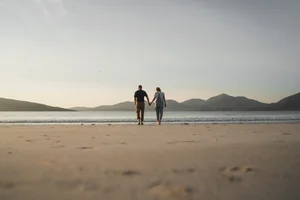
Journal: Isle of Rùm Expedition
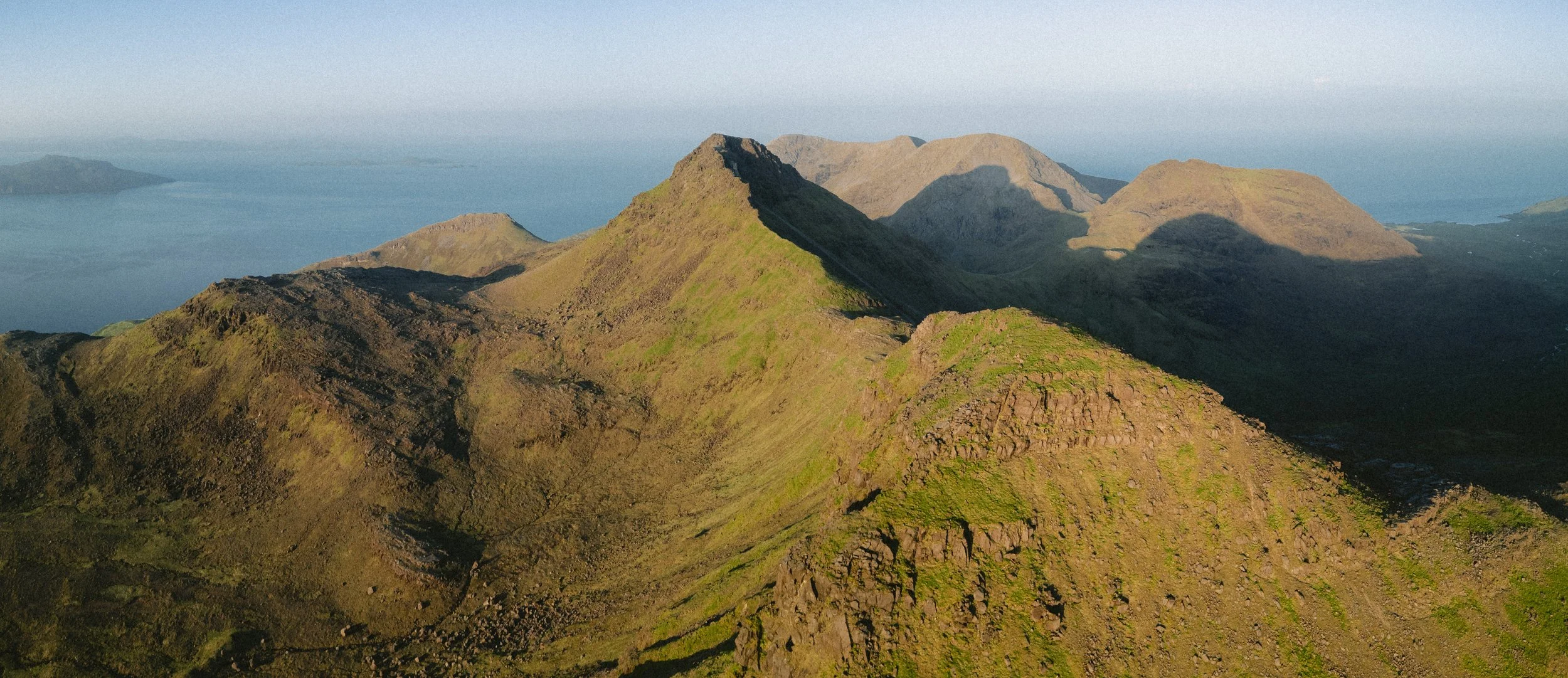
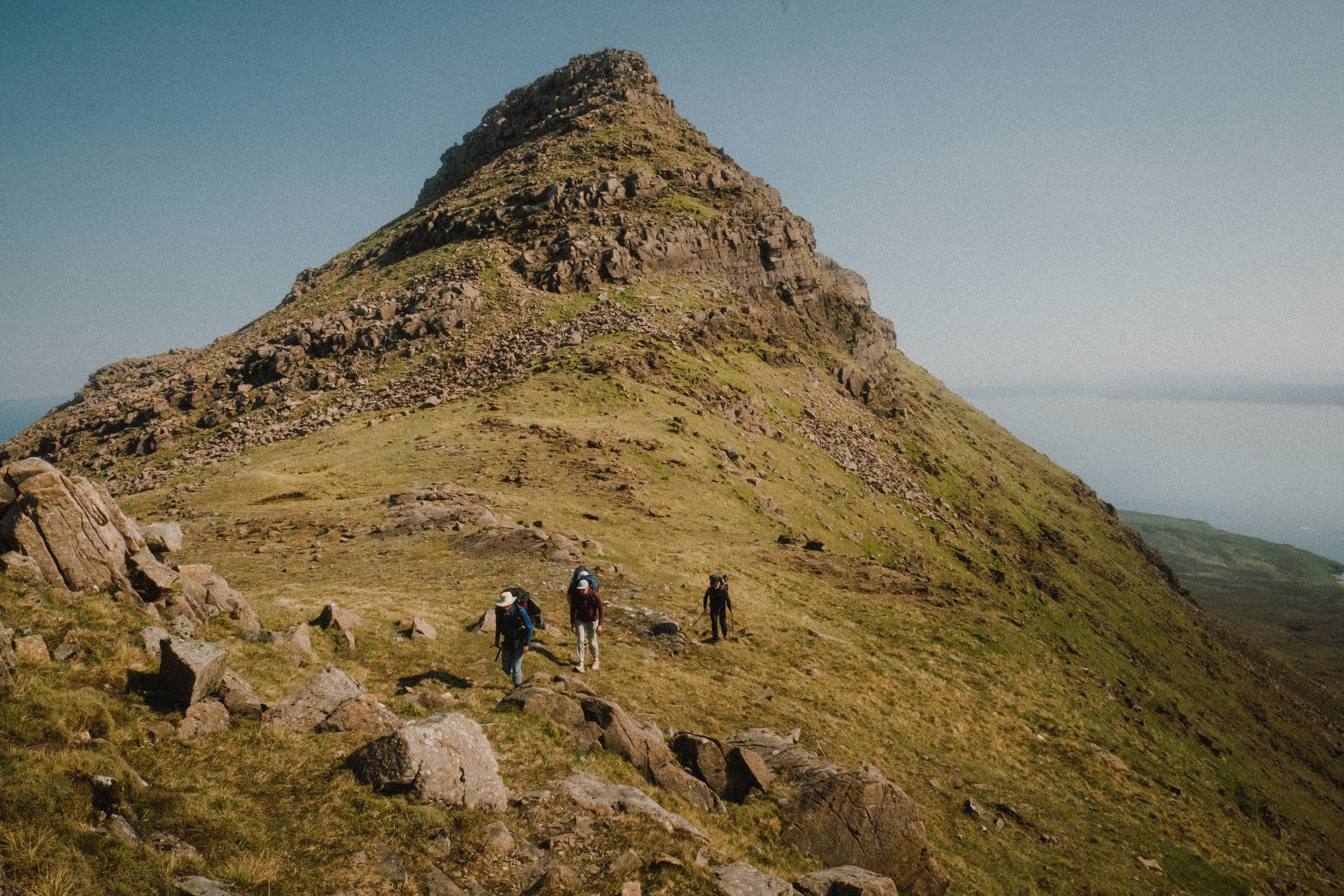
The photography expedition on the Isle of Rùm was an unforgettable trip filled with stunning landscapes and incredible geological features. We spent three nights camping on the island. Each day was dedicated to exploring Rùm’s beautiful mountains, with breathtaking views of the peaks, rolling hills, and the incredible coastline. Hiking through the wild terrain gave us a chance to experience the island’s unique landscape and learn about its history and geology. Co-lead with Ross Davidson we carefully planned the expedition too make the most out of the Island.
Chapter one: Mallaig to Rùm
The Isle of Rùm has long held a special place in my heart after a couple of visits, with its dramatic Cuillin ridge, rugged landscapes, and remarkable geology. This expedition was an opportunity to immerse ourselves in one of Scotland’s wildest islands, spending three nights camping among the spectacular mountains.
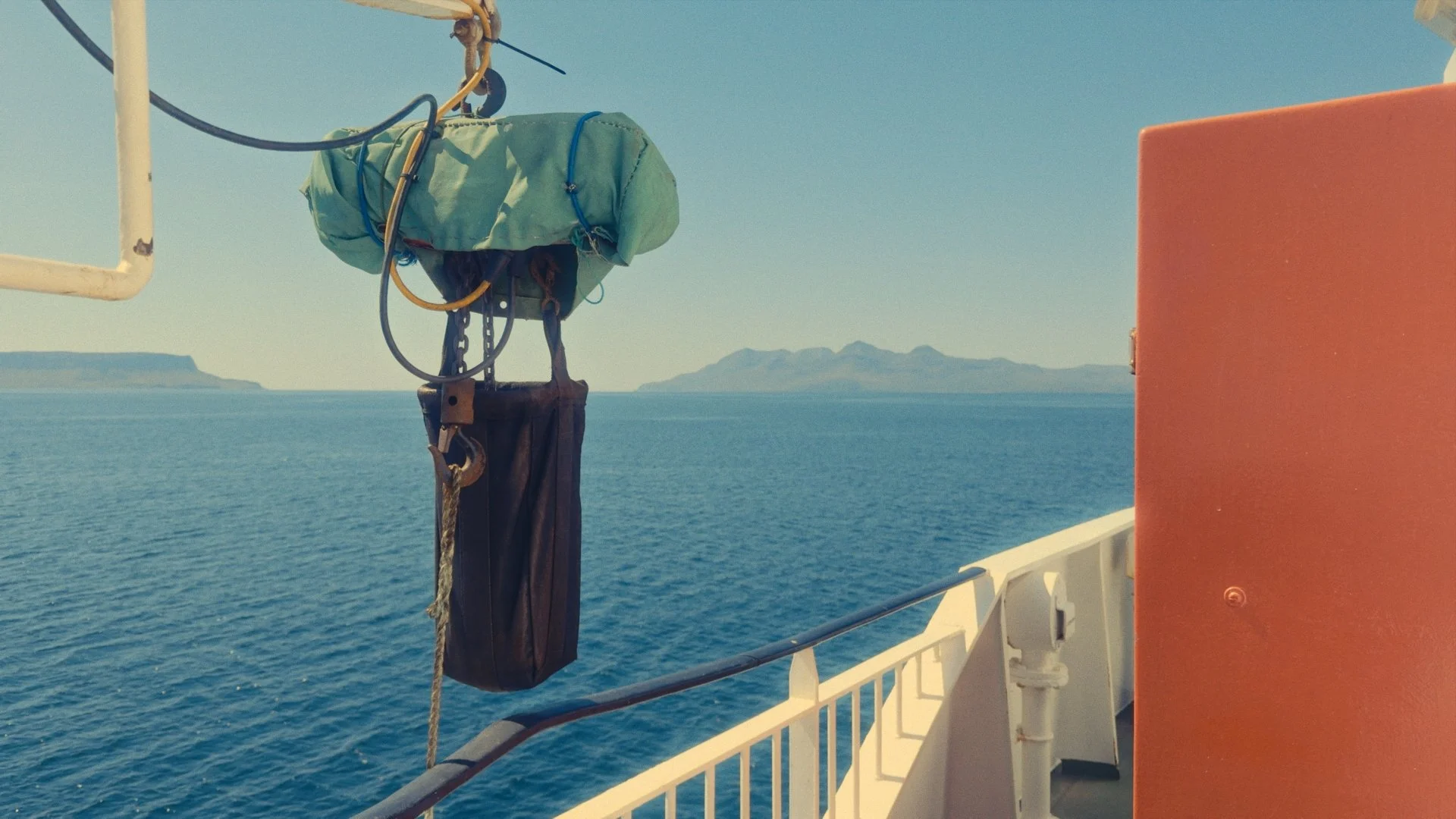
The journey began with the ferry crossing from Mallaig. As the mainland slowly disappeared behind us, anticipation grew with every mile across the Sea of the Inner Hebrides. The silhouette of Rùm gradually comes closer on the horizon, its volcanic peaks rising steeply from the sea and hinting at the incredible geology.
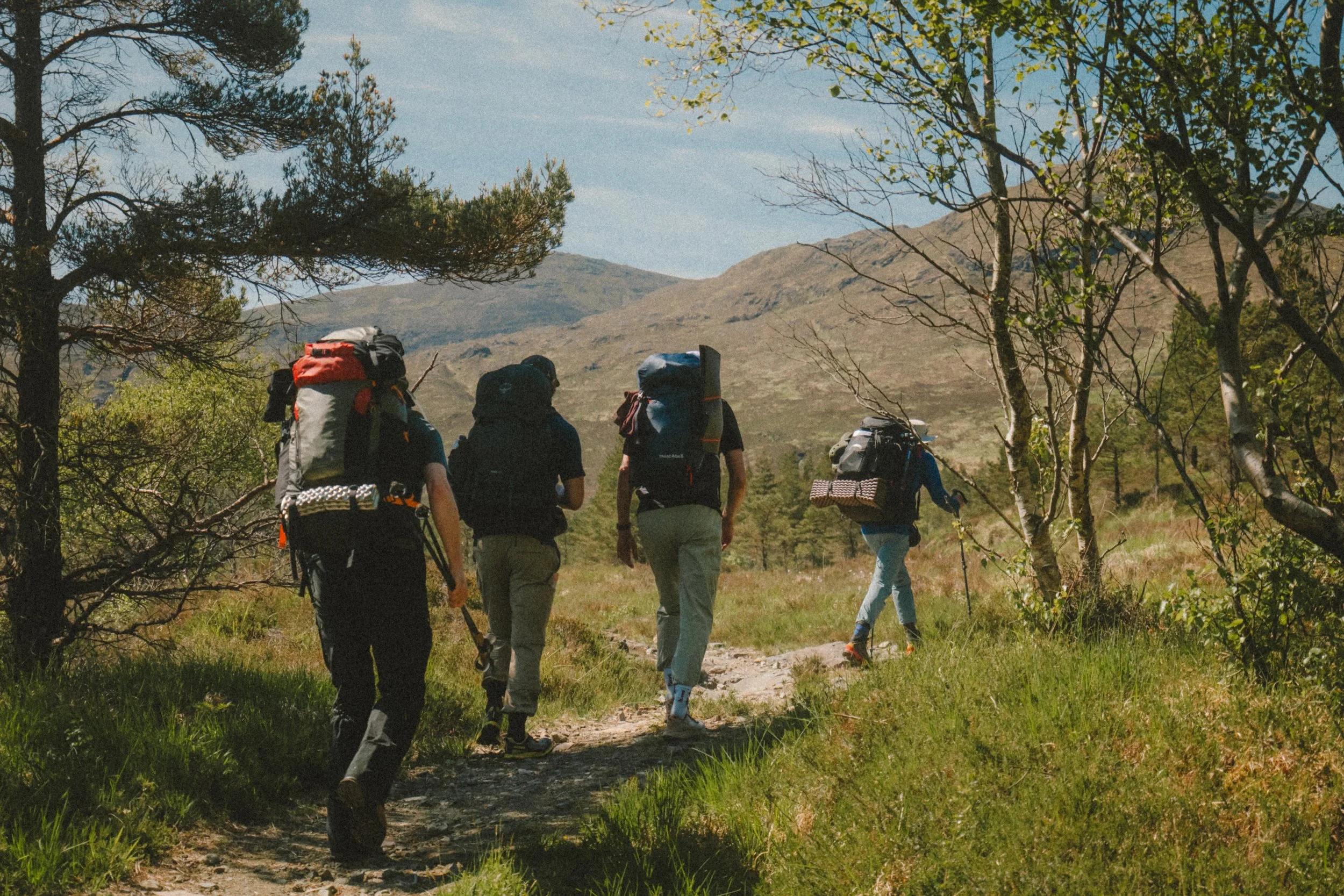
Arriving on Rùm always feels like stepping into another world. The island’s remote nature is immediately apparent; there are few roads, little development, and an overwhelming sense of open mountain wilderness. After arriving at Kinloch, preparations were made for several days wild camping in the heart of the island.
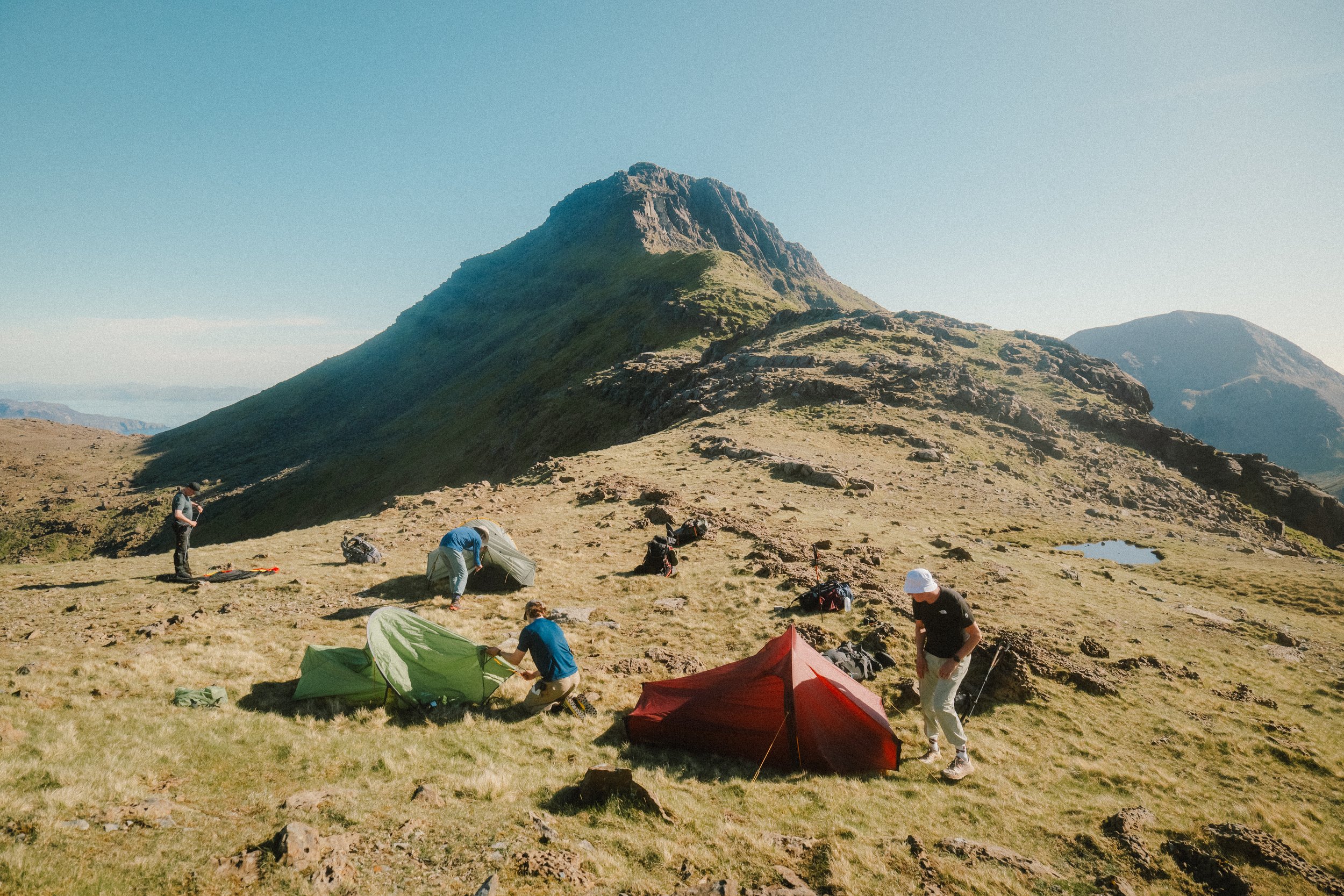
Fortune favoured the expedition with spectacular weather during the start of the hike. Clear skies, warm sunshine, and exceptional visibility revealed Rùm at its very best. The mountains stood sharply against deep blue skies, while the surrounding seas shimmered in the distance.
Chapter 2: Hike to Hallival
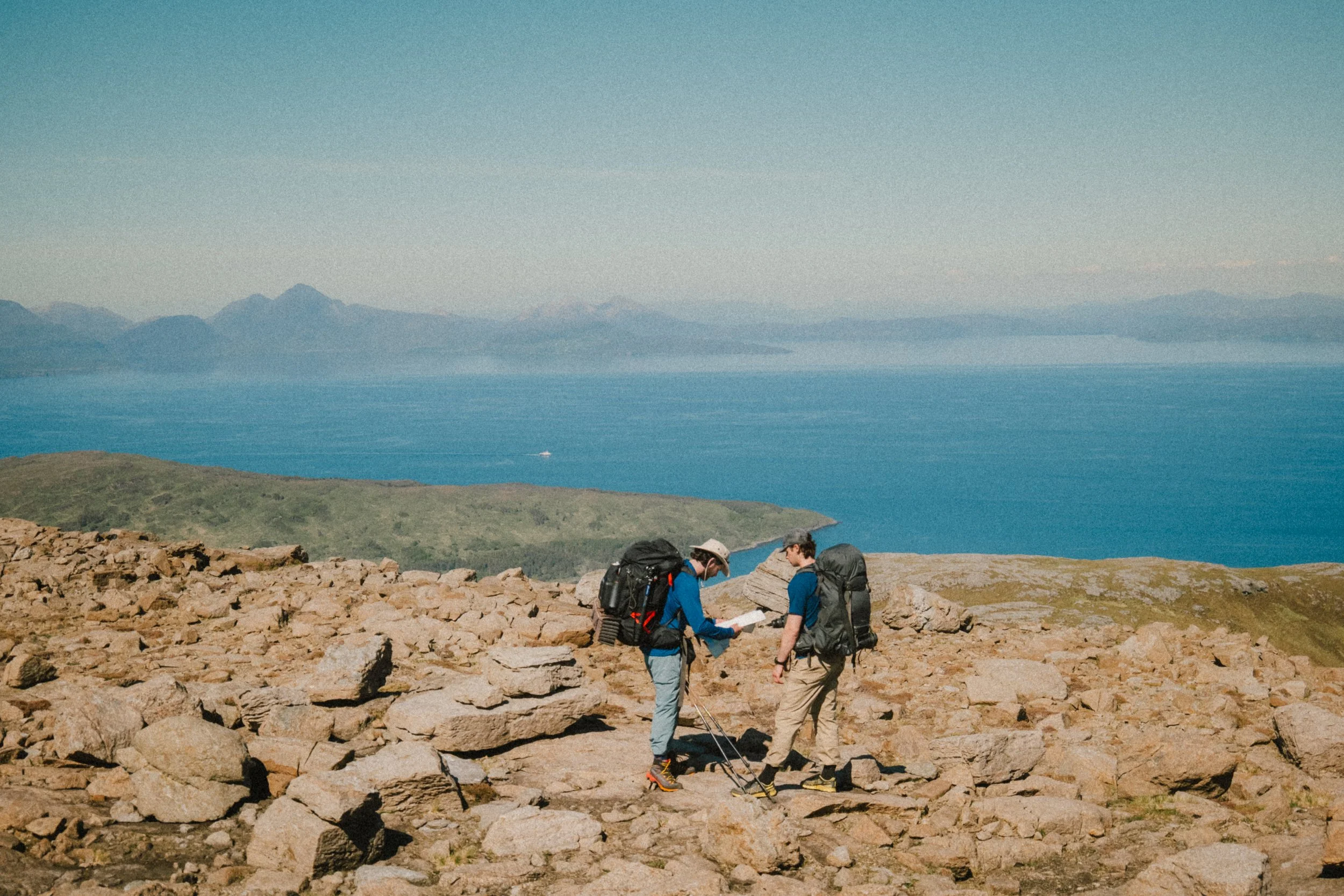
Our first mountain on Rùm was Hallival, one of the island’s most distinctive peaks and an ideal introduction to the rugged landscape of the Rùm Cuillin. Leaving Kinloch behind, we began the steady climb into the hills. As we gained height, the village quickly disappeared below, replaced by expansive views across the sea and out towards the other Small Isles and the distant mainland mountains.
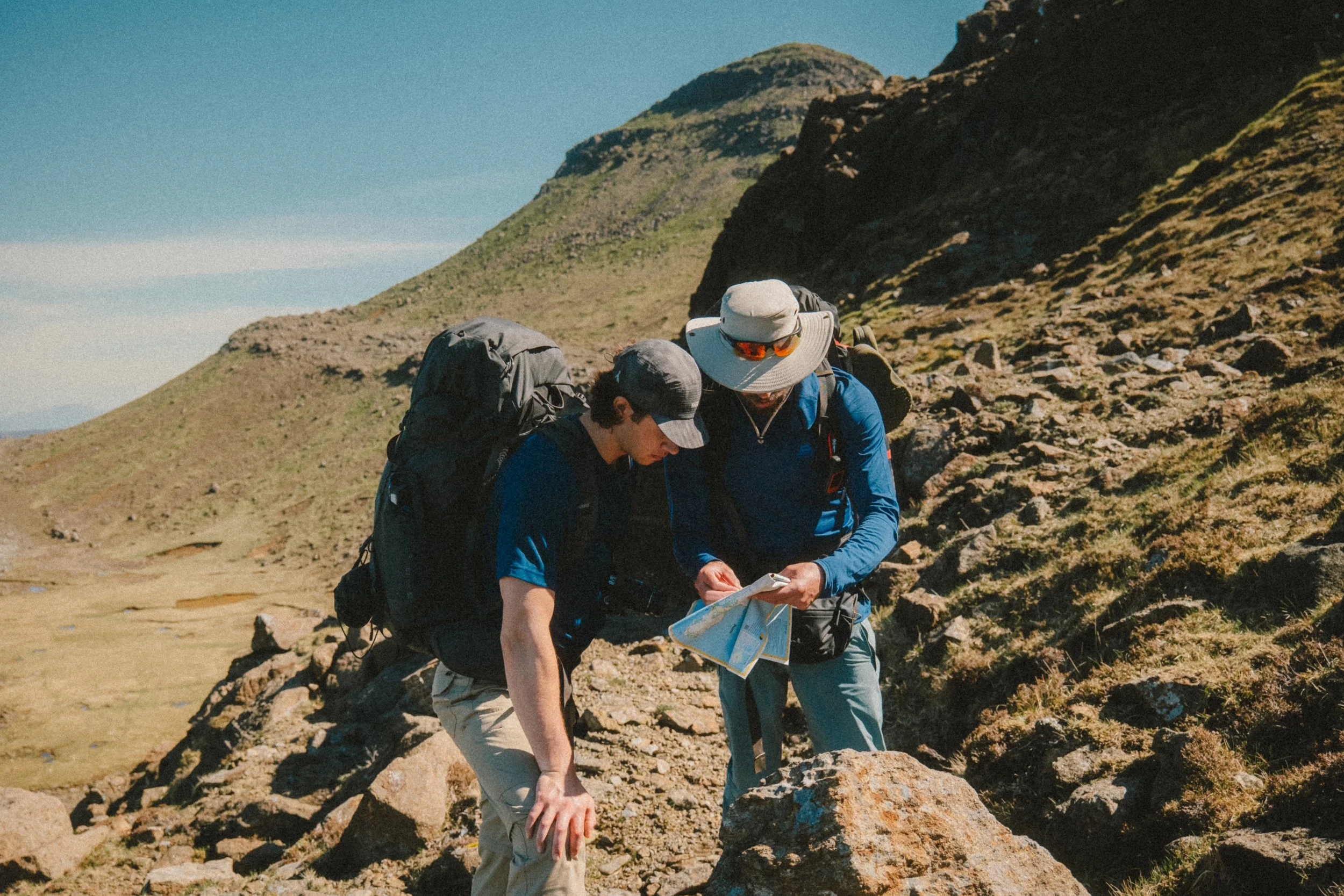
The ascent of Hallival is a rewarding hike, gradually leading into increasingly dramatic terrain. With map in hand, we took time to study the surrounding landscape, identifying possible routes and gaining a better understanding of the mountain landscape around us. Rùms network of peaks and bealachs sparks curiosity and exploration.
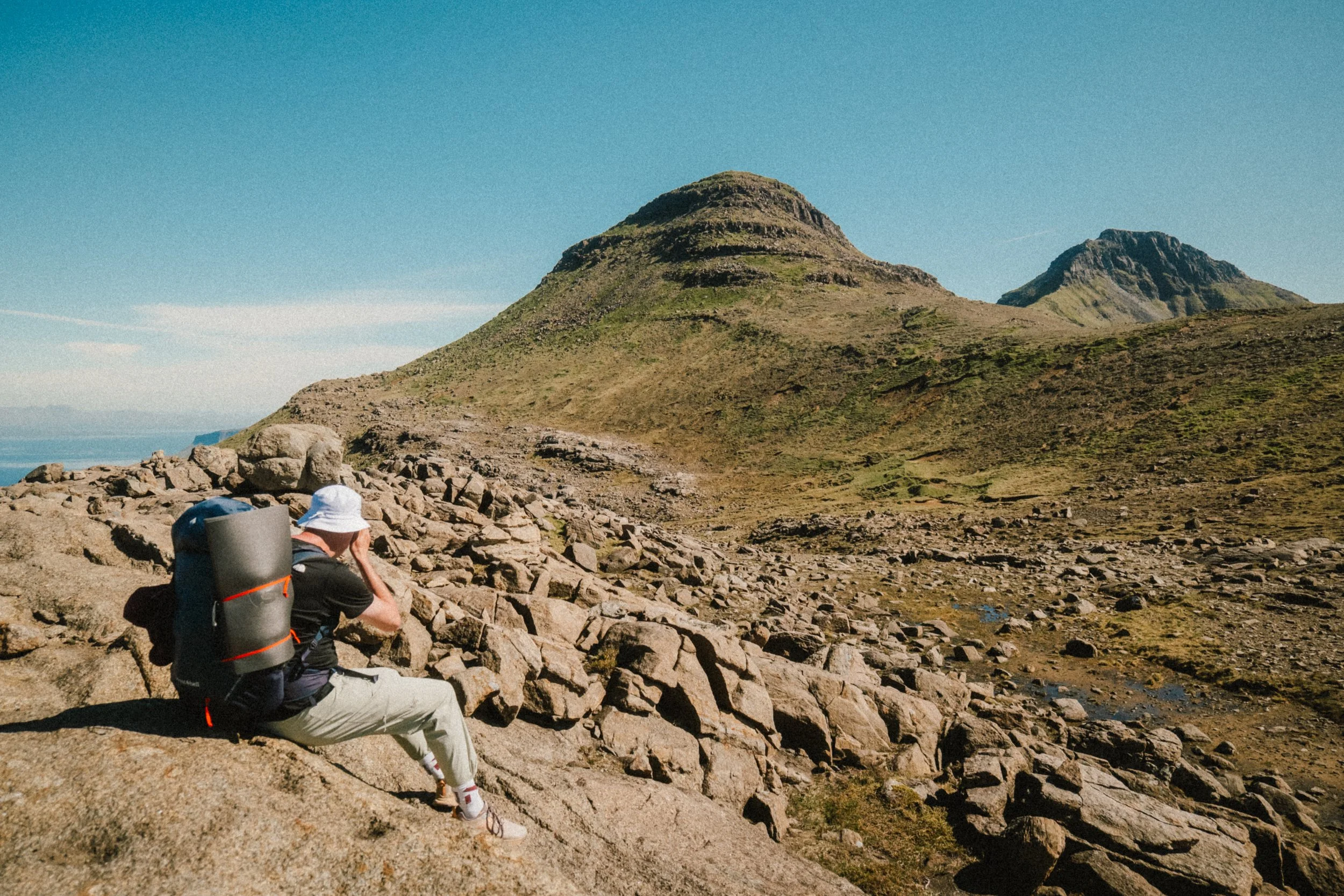
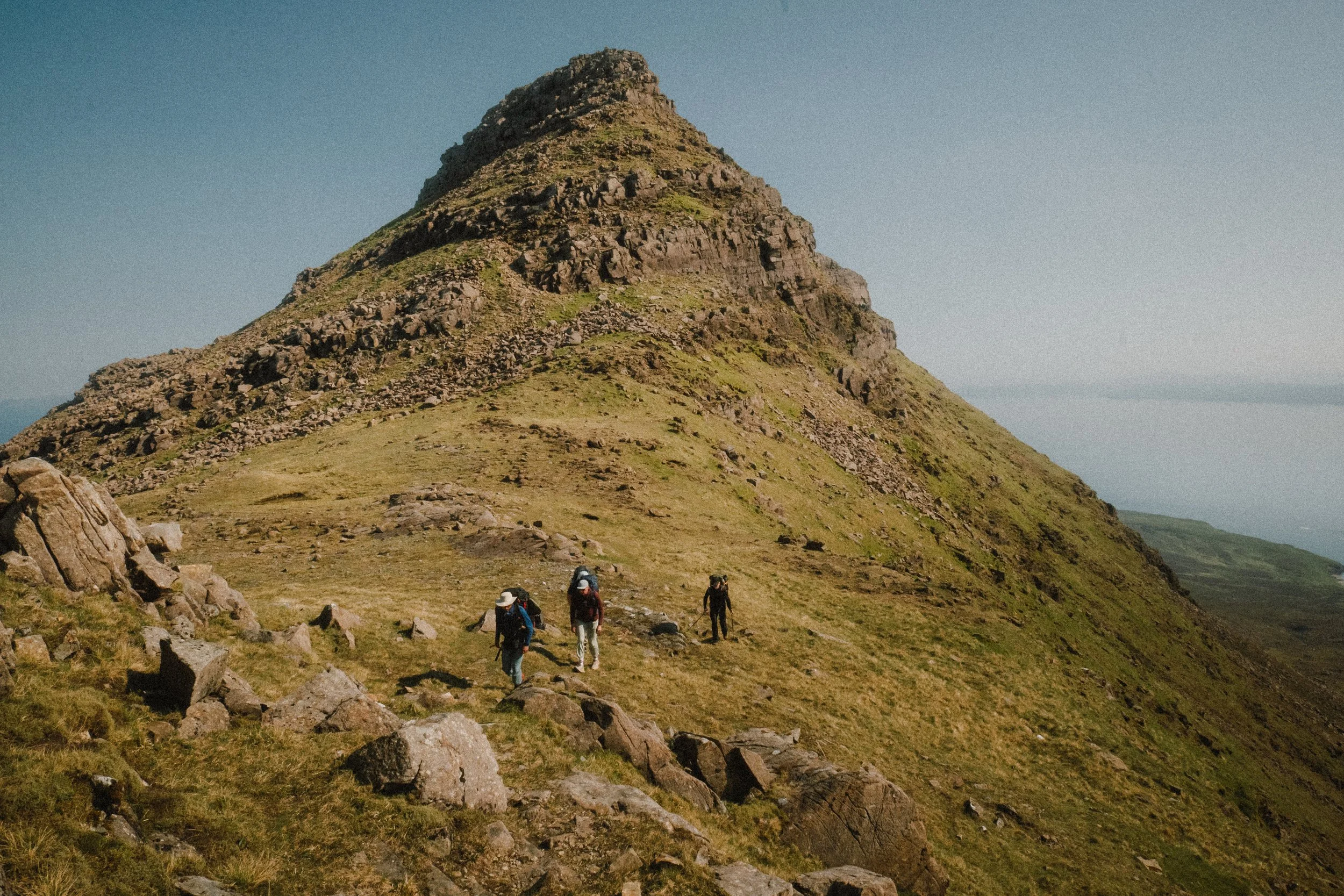
The higher we hiked, the more impressive the scenery became. Steep slopes rose around us, while the neighbouring summit of Askival dominated the skyline ahead. The sense of remoteness was incredible, Rùm felt like a true wilderness.
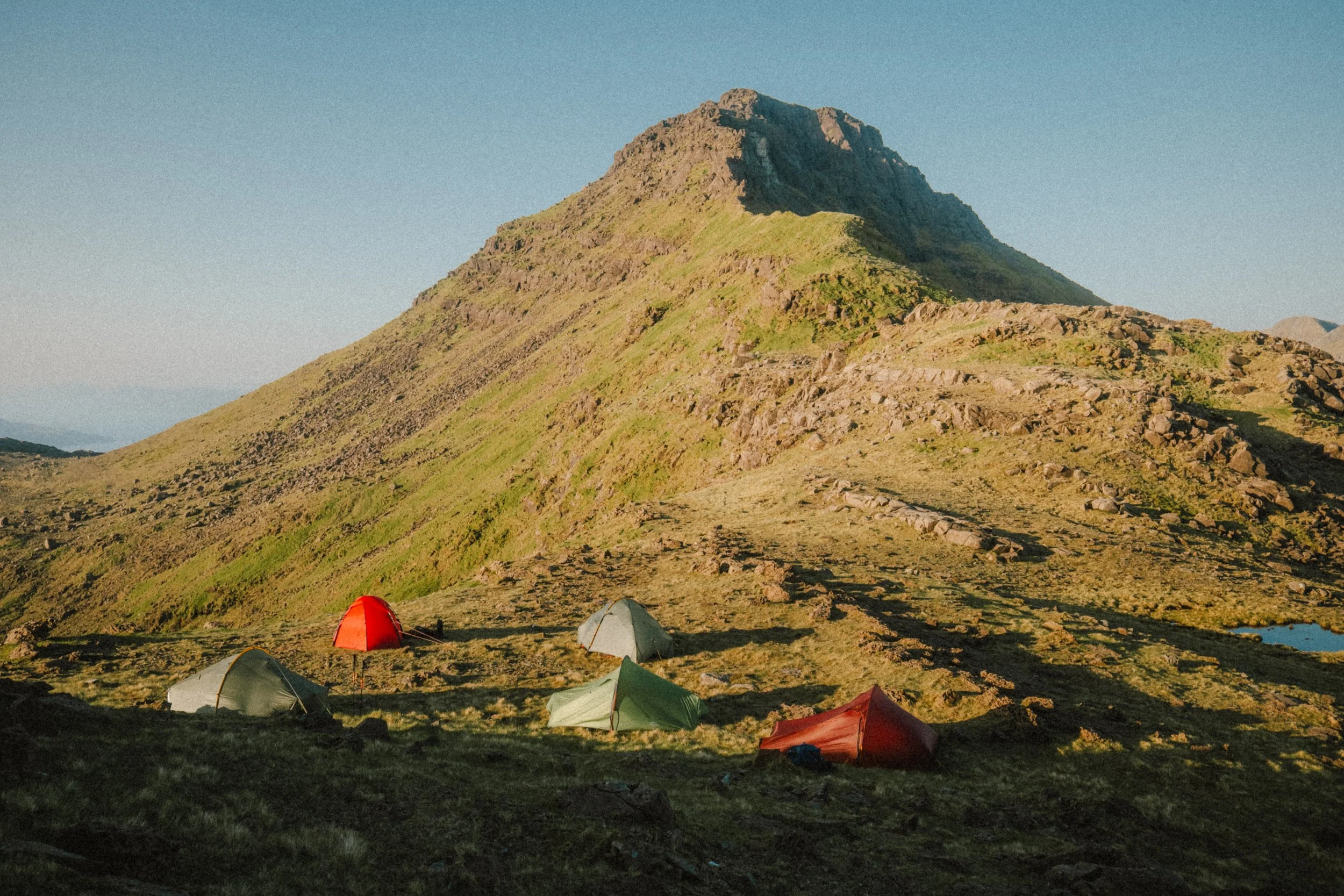
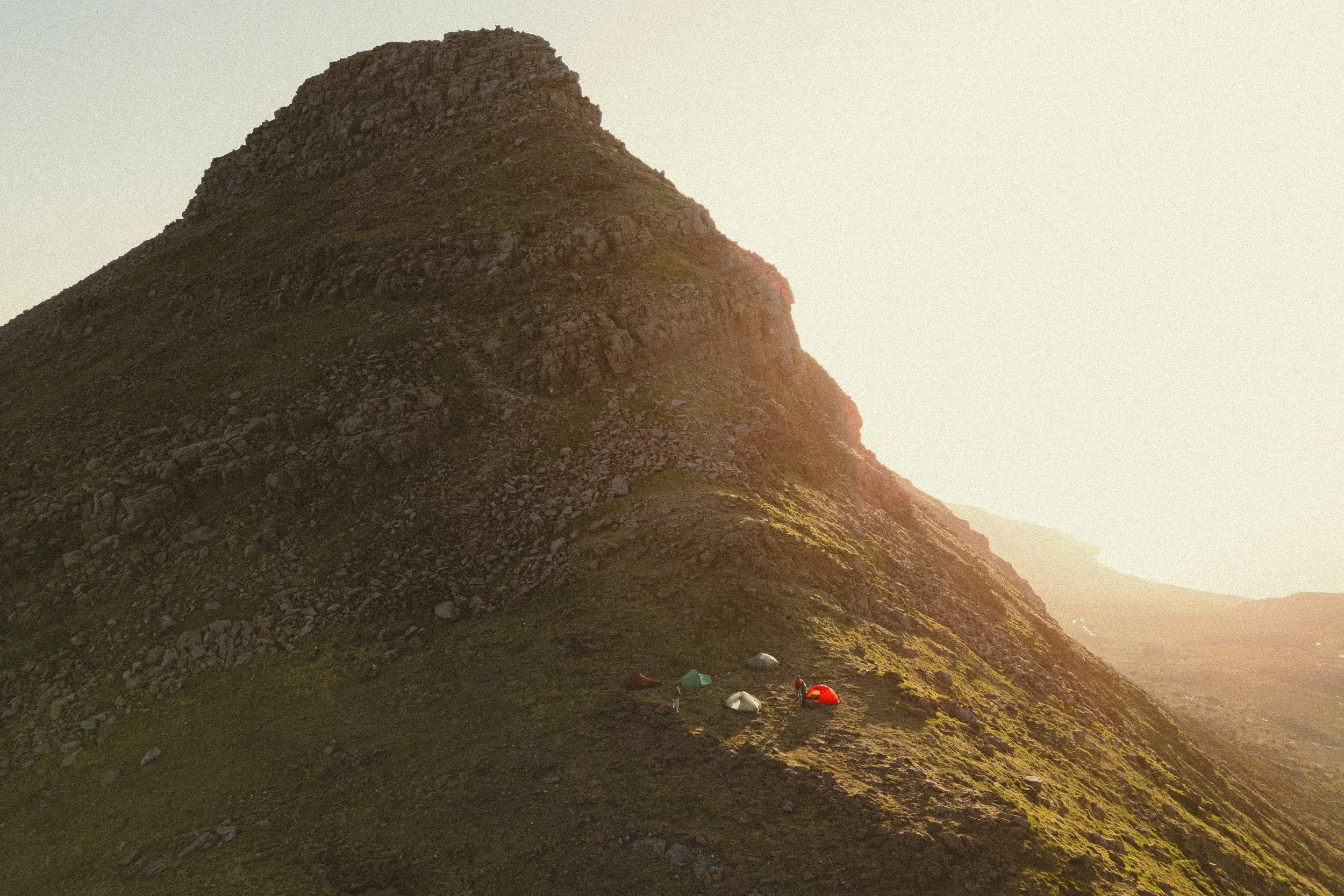
Along the way, we paused to admire the island’s fascinating geology. The volcanic origins of Rùm are written into its landscape, with exposed rock layers bearing witness to millions of years of geological history. Occasionally stopping to photograph these features, we could see how the character of the mountains changes from one area to another, shaped by ancient volcanic activity and the relentless forces of weather and erosion. The ever-changing light transformed the landscape throughout the day, revealing new details in the rock and emphasising the complex structure of the mountains. Each photograph became a record of how the island’s geology changes across the mountains. Before making the final ascent to Hallival, we decided to traverse across the mountain and head into the bealach between Hallival and Askival. This would become our home for the night, a spectacular wild camping spot high in the mountains with incredible views in every direction. After pitching the tent and settling in, we took time to rest and enjoy some food while soaking in the incredible surroundings. With the evening light beginning to soften, the atmosphere in the bealach was one of complete peace and isolation.
Chapter 3: Hallival Sunset
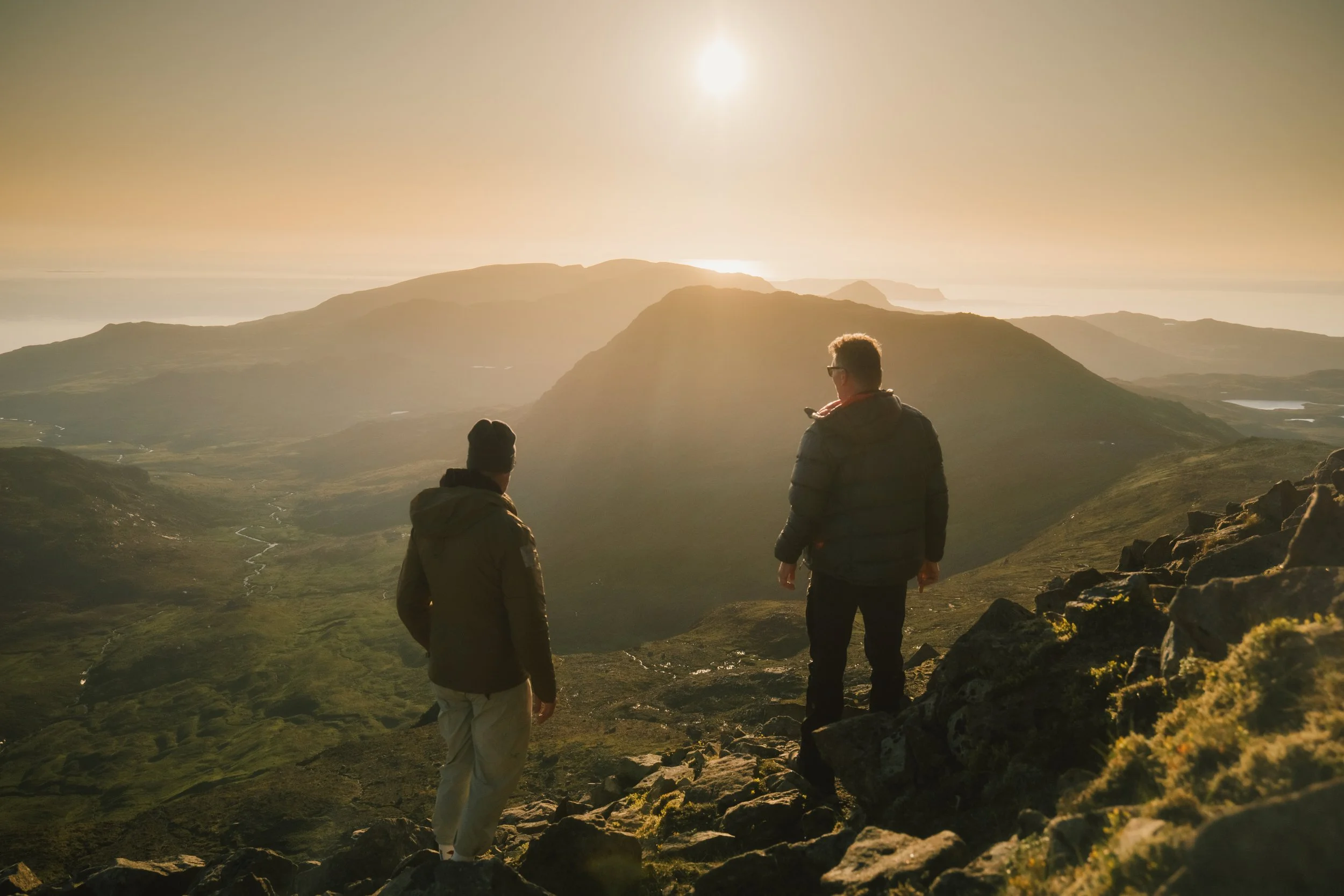
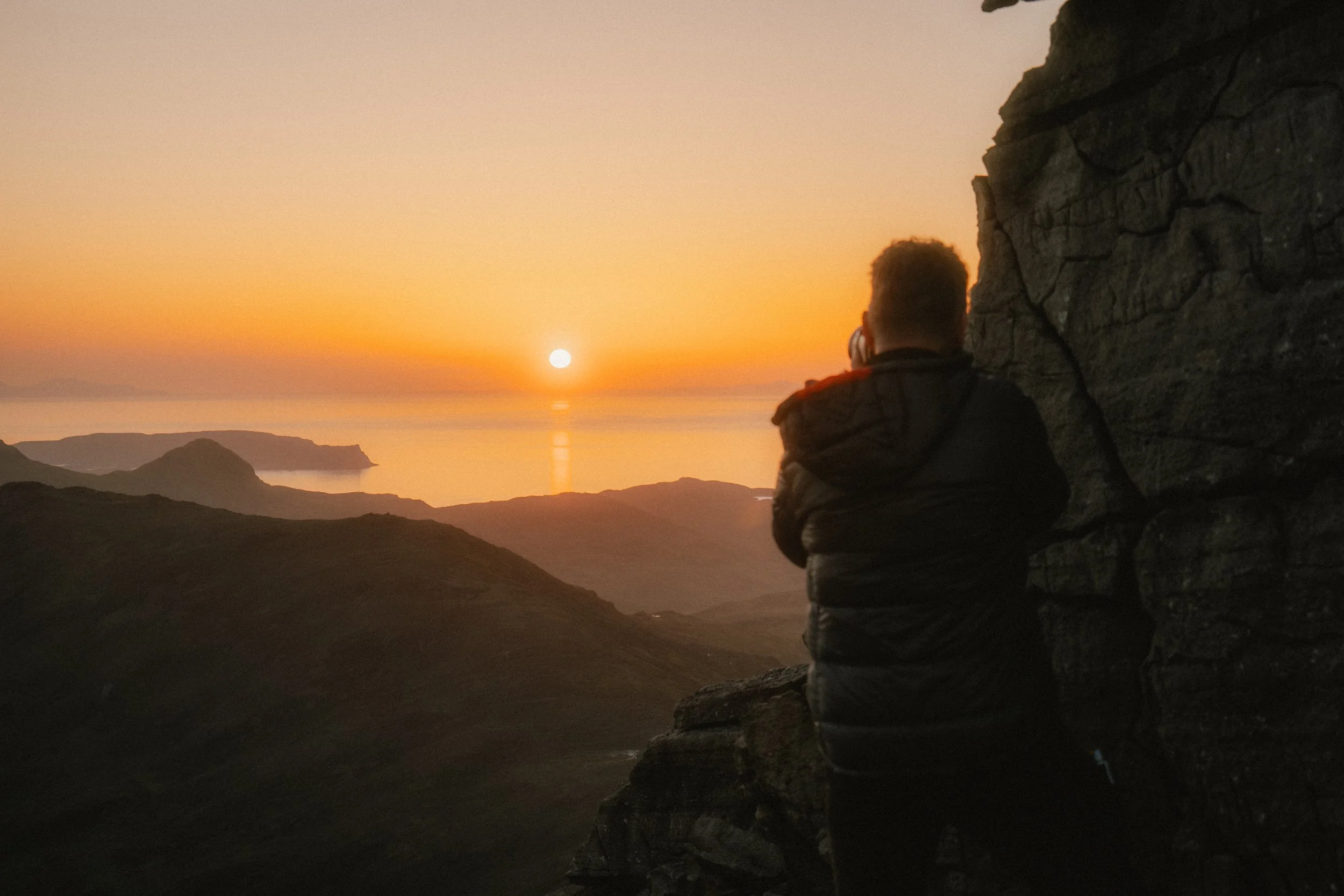
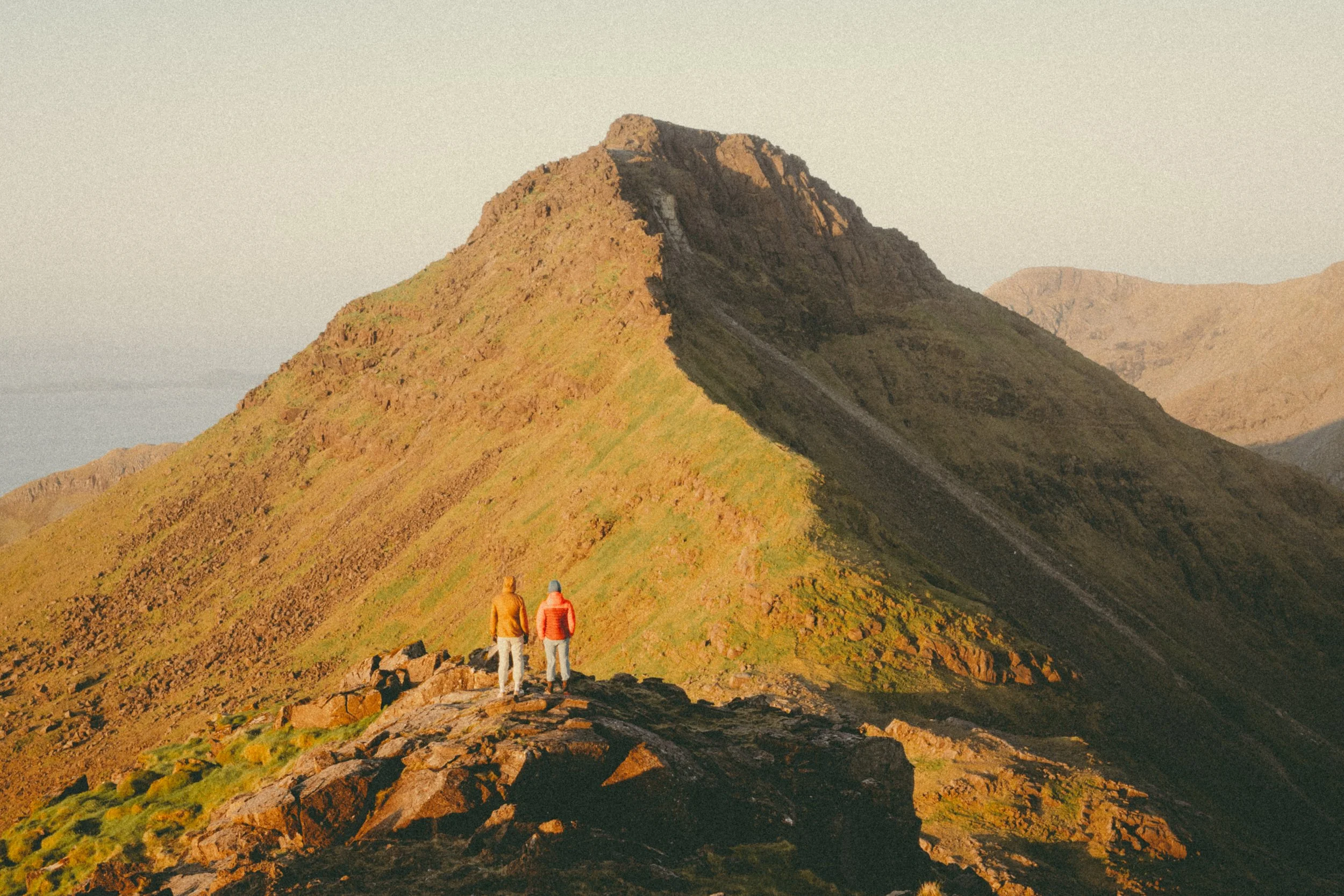
Refueled we set off for the final climb to Hallival's summit. The ascent was short but rewarding, and as we gained height, the views grew ever more impressive. Reaching the summit in the late evening felt particularly special. The sea stretched out endlessly to the west, while the mountains of Rùm glowed in the warm light of the setting sun. As the sun slowly sank below the horizon, golden and orange hues swept across Rùm and distant islands, creating a scene that seemed almost unreal.
From the summit of Hallival, the complexity of Rùm's landscape truly reveals itself. The intricate network of the landscape, volcanic formations, and ancient rock layers tells a story millions of years in the making. Looking across the island, it becomes clear why Rùm is regarded as one of the most geologically significant landscapes in Britain. Every mountain and valley bears the marks of its remarkable past, shaped by volcanic activity and countless ages of erosion through the ice age.
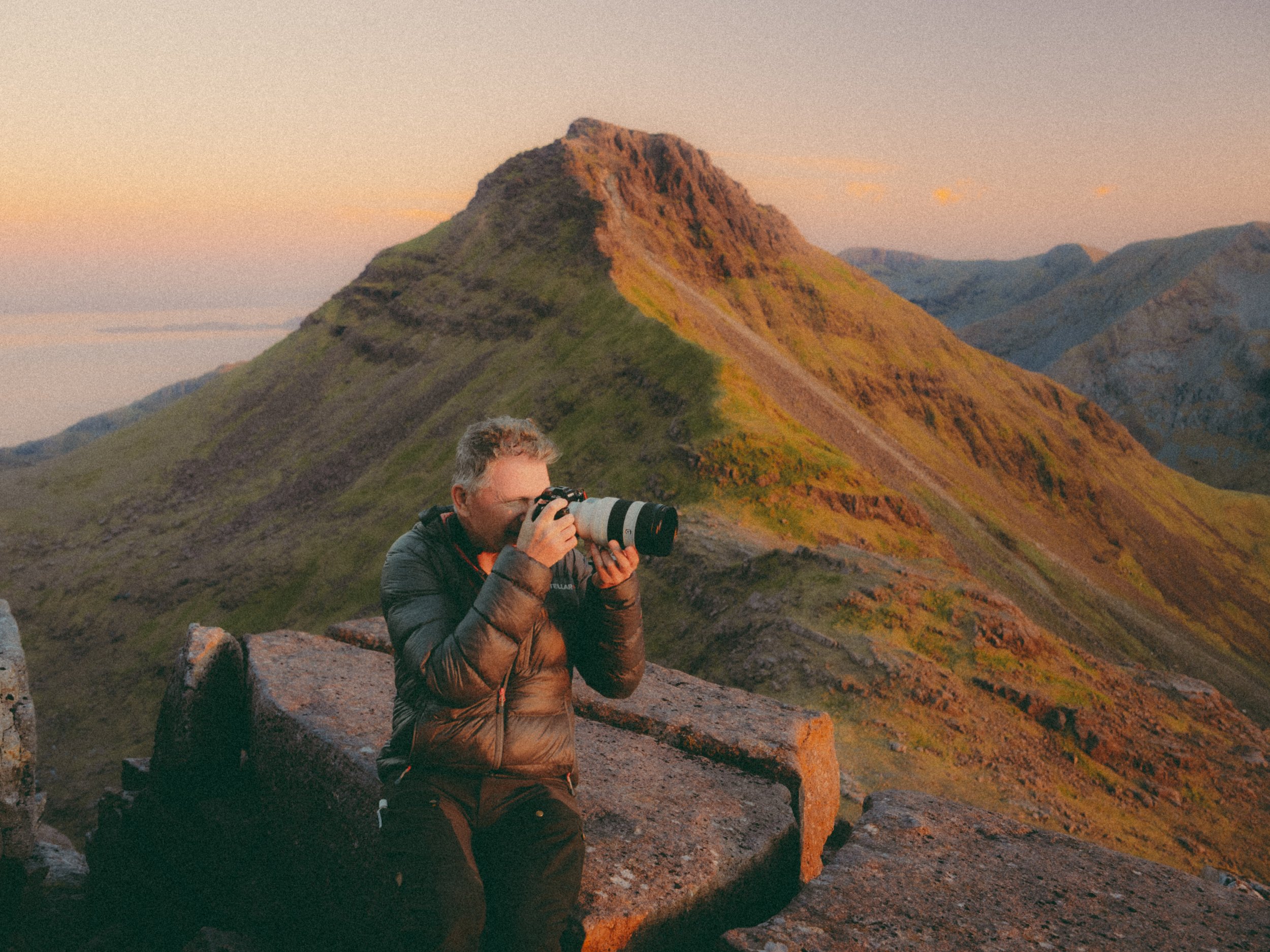
Standing there as the light faded, camera in hand, it was impossible not to feel connected to the island's history. Photographing these landscapes felt like more than simply capturing an image—it was an opportunity to document and share a small part of Rùm's enduring story. To witness such beauty and complexity from the summit of Hallival was a privilege, and one of the defining moments of the expedition.
Chapter 4: Camping under the stars
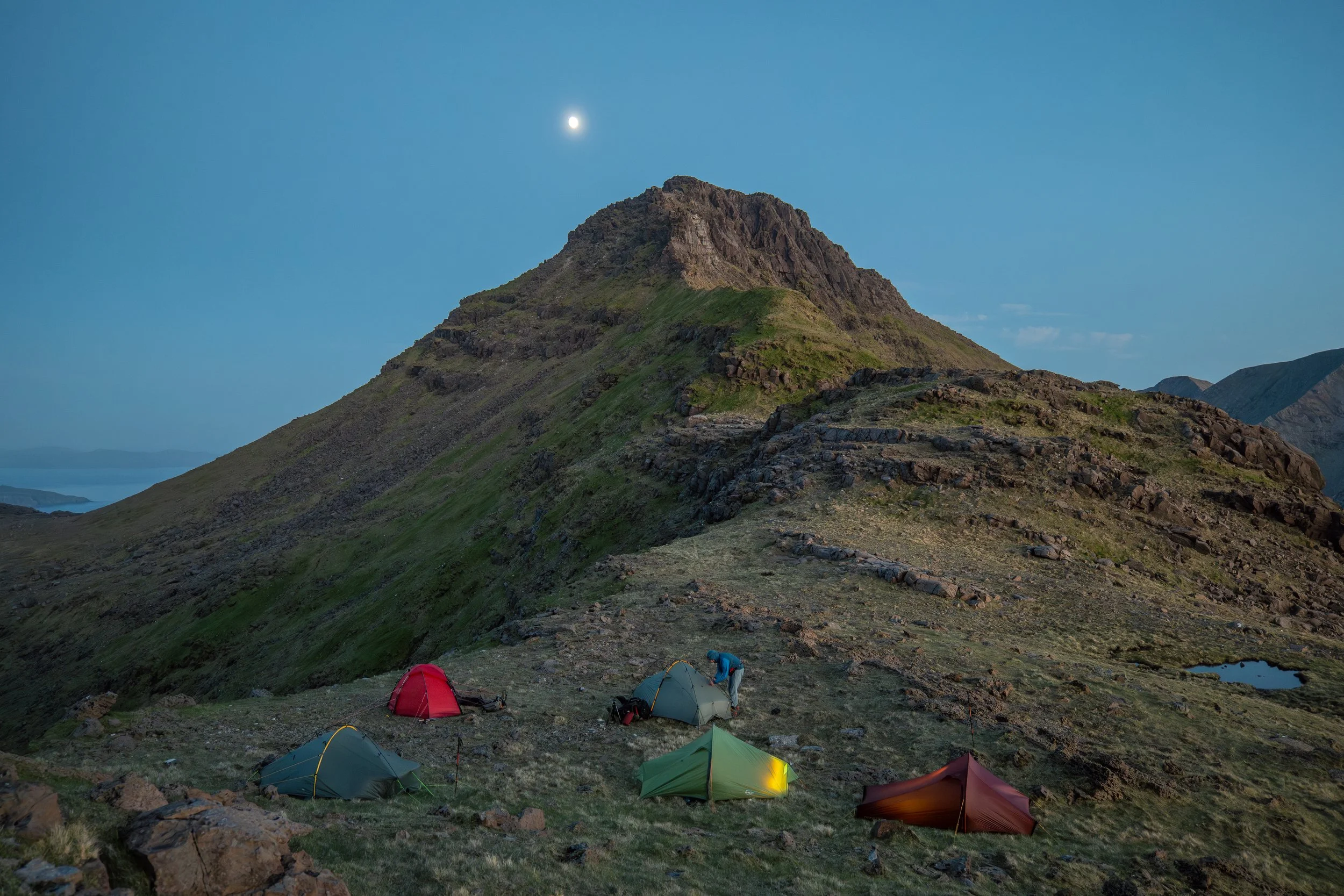
As the sun light faded across the mountains, we left Hallival's summit and made our way back down to the bealach where our tent awaited. The last light of day lingered on the horizon as we carefully descended the rocky slopes, with the silhouettes of Hallival and Askival standing tall against the evening sky. Returning to camp after such an unforgettable sunset brought a deep sense of contentment—there was nowhere else we would rather have been.
The night was calm and clear, and as darkness fully arrived, the sky revealed an incredible display of stars. Rùm offered a truly pristine night sky. Lying in the tent beneath the mountains, surrounded by silence and wilderness, it was easy to lose track of time while gazing upwards at the countless stars overhead. Camping high in the bealach between Hallival and Askival felt like sleeping in the heart of the island itself.
Before long, the first signs of dawn began to appear. We woke early to a soft glow emerging on the horizon and quickly prepared for another ascent of Hallival. There is something special about returning to a summit at sunrise; the mountain feels transformed in the quiet hours of the morning. As we climbed once more up the summit, the landscape gradually emerged from darkness, revealing familiar shapes in an entirely different light.
Standing on the summit as the sun rose above the horizon was a magical experience. A beautiful, soft light spread across the mountains, illuminating the far side of Askival with warm tones of gold and orange. The mountain that had appeared dramatic and imposing at sunset now seemed gentler and more delicate in the morning glow. Shadows stretched across the corries, highlighting the textures and contours of the landscape in ways that had been hidden the evening before.
The sunrise gave the mountains a completely different character. The changing light transformed the colours of the rock and revealed new details across the volcanic landscape. It was a reminder that Rùm is never the same twice, each hour of the day offers a different perspective. Standing once again on Hallival, watching the first light sweep across the island, we were treated to a view that felt both familiar and entirely new.
Chapter 5: Reaching Askival
After experiencing the sunrise from Hallival, we returned to camp for a few more hours of rest. The early start had been well worth it, and as the morning light strengthened over the mountains, we slowly woke to another beautiful day on Rùm. With no rush to leave such an incredible campsite, we enjoyed breakfast surrounded by the dramatic peaks of the Rùm Cuillin before packing away our tents and preparing for the next stage of the expedition.
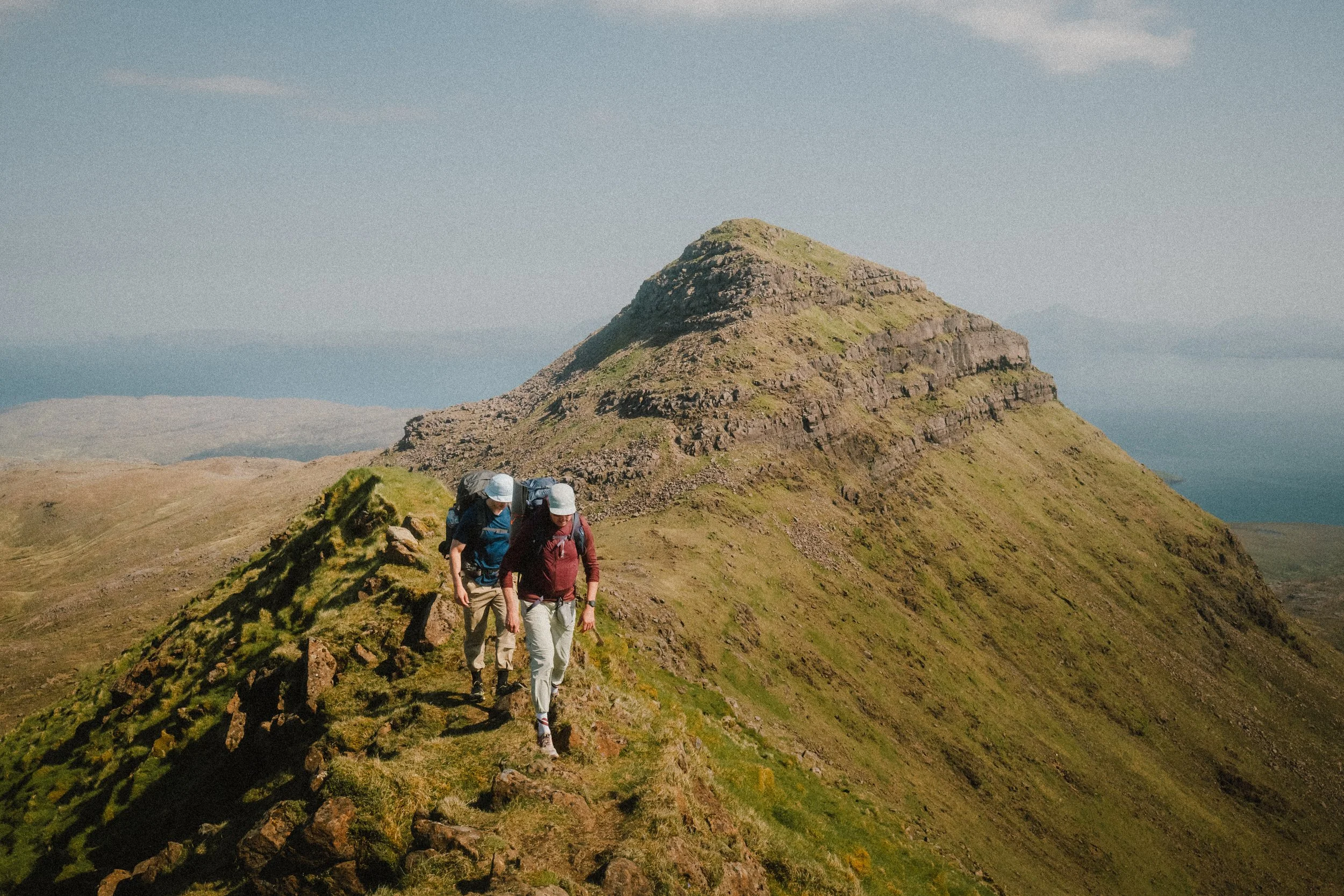
Our objective for the day was Askival, Rùm’s highest peak and one of the finest mountains on the Island. Leaving the bealach behind, we began the ascent towards the summit. The route up Askival offered a different feel from Hallival, with the terrain becoming rougher and more rugged underfoot. The mountain demanded more attention, and sections of enjoyable scrambling added an extra sense of adventure to the climb. Hands were occasionally needed on the rock, and picking a route through the volcanic outcrops made the ascent both engaging and rewarding.
As we gained height, the mountain revealed itself in ever-changing ways. Steep ridges and rocky slopes gave the climb a more alpine feel, while the surrounding landscape seemed to unfold further with every step. The varied terrain was a reminder of Rùm’s volcanic origins, where ancient geological forces have sculpted the mountains.
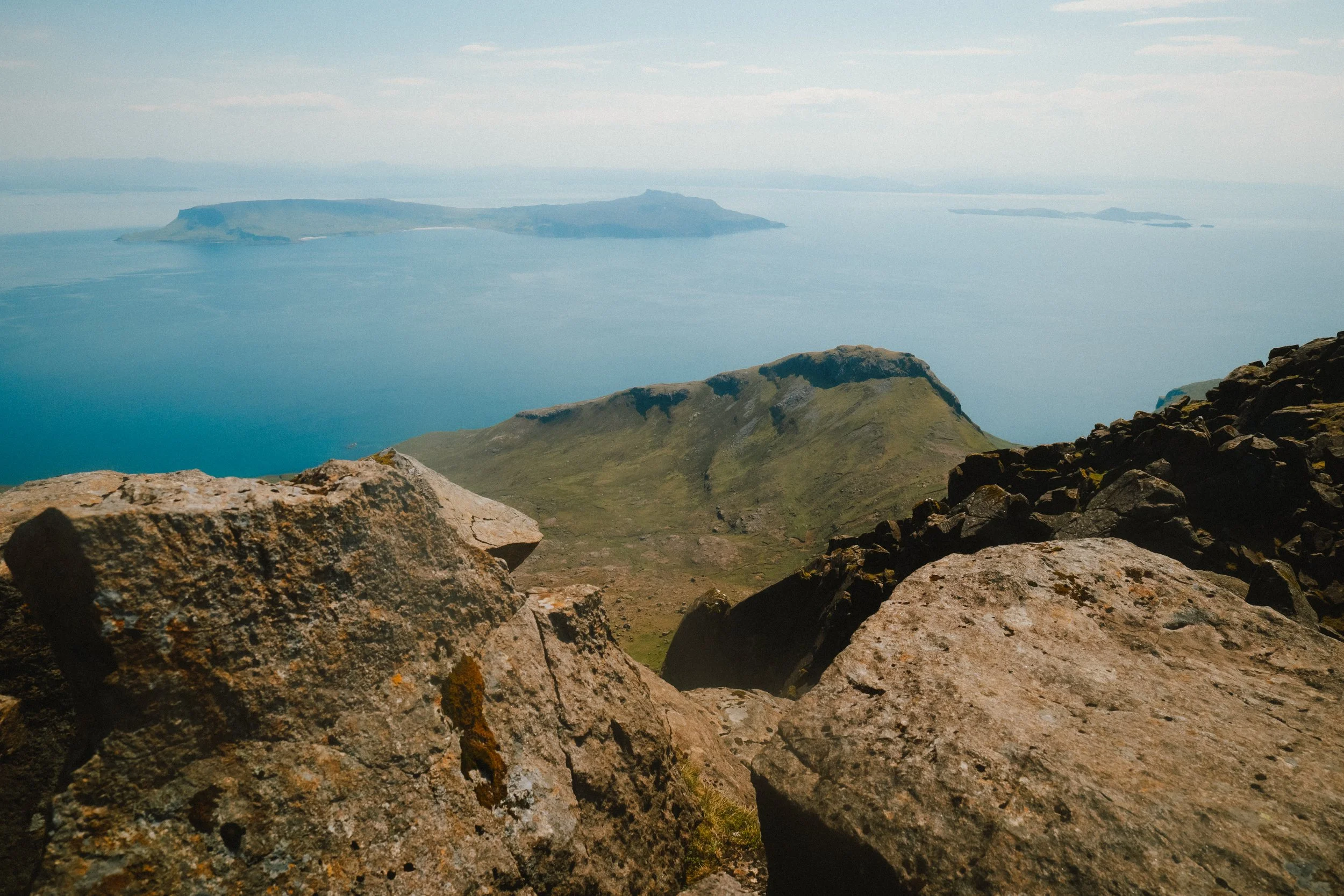
Reaching the summit of Askival felt like standing at the heart of the island. As Rùm’s highest and most central peak, it offers an unrivalled panorama across the entire island. From the summit, nearly all of Rùm’s mountains could be seen stretching away in every direction—Hallival, Trollaval, Ainshval and the many ridges and corries that define this remarkable landscape. Beyond the island itself, views extended across the Small Isles and out towards Skye and the distant mainland mountains.
We spent a long time on the summit simply soaking up the views and appreciating the scale and complexity of the landscape around us. There is something special about standing on a central summit and seeing the interconnected nature of the mountains below, each ridge leading into another and every glen telling part of the island’s story.
Our original plan for the second night had been to camp in the bealach between Askival and Trollaval, another spectacular location high among the mountains. However, mountain expeditions often require flexibility, and after carefully checking the weather forecast, it became clear that conditions were beginning to change. Wind speeds were forecast to increase significantly overnight, and there was even a risk of thunderstorms moving across the island.
With safety in mind, we knew it was time to reassess our plans. Although it was disappointing to move away from our intended campsite, the changing weather reminded us of the importance of adapting to the mountains. Rùm’s wild character is part of what makes it so special, and respecting the conditions is all part of hiking safely through a landscape.
Chapter 6: Harris We Go
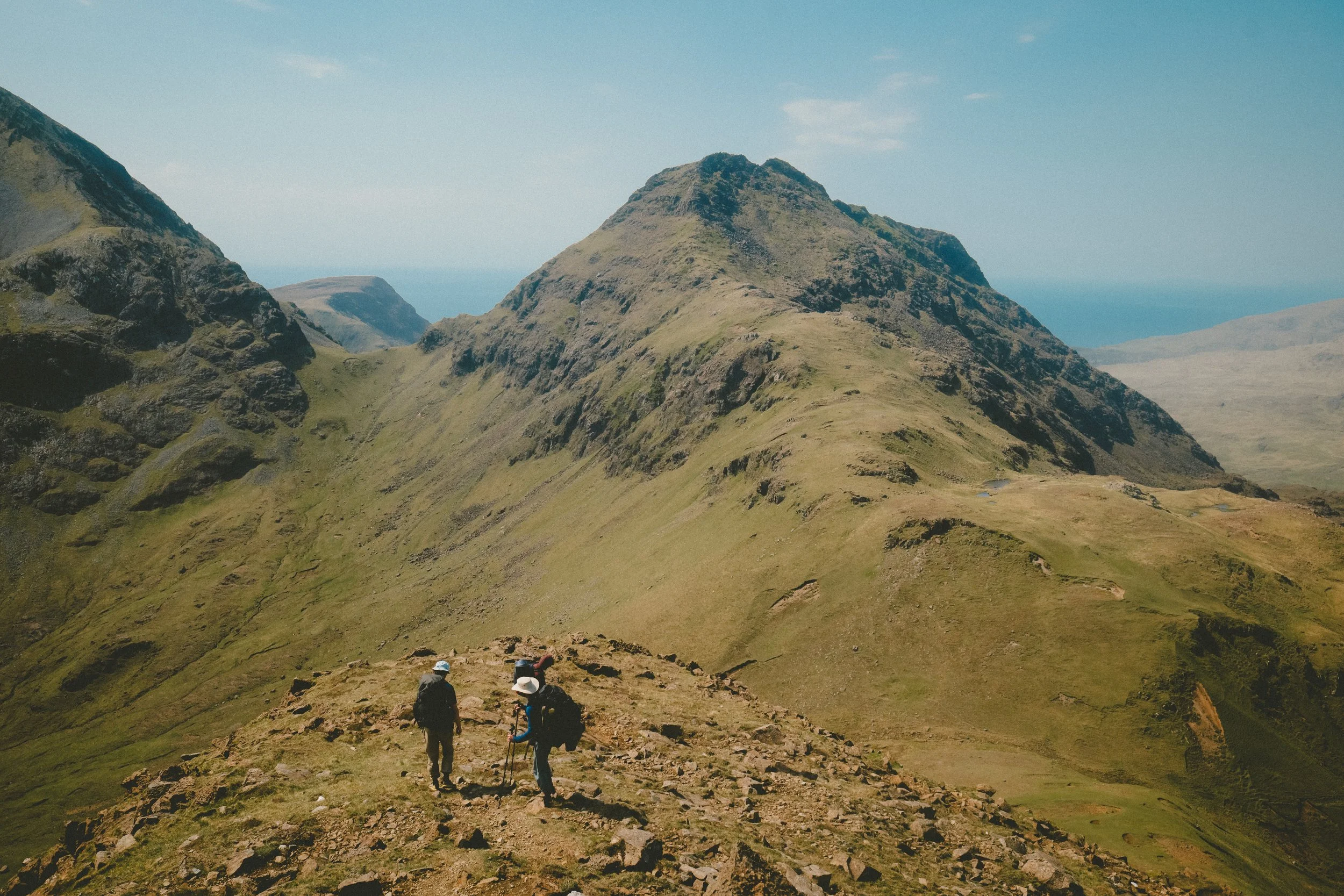
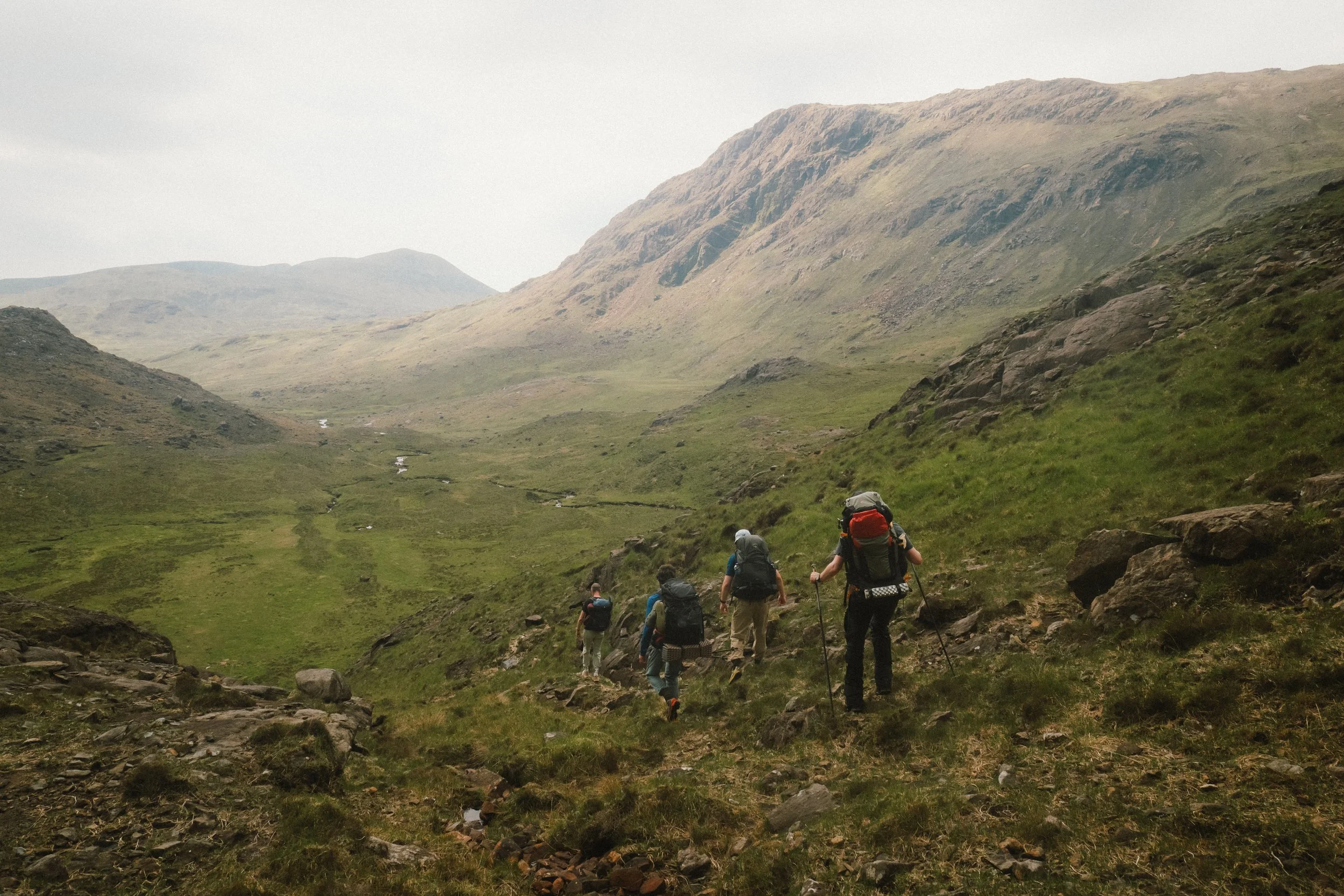
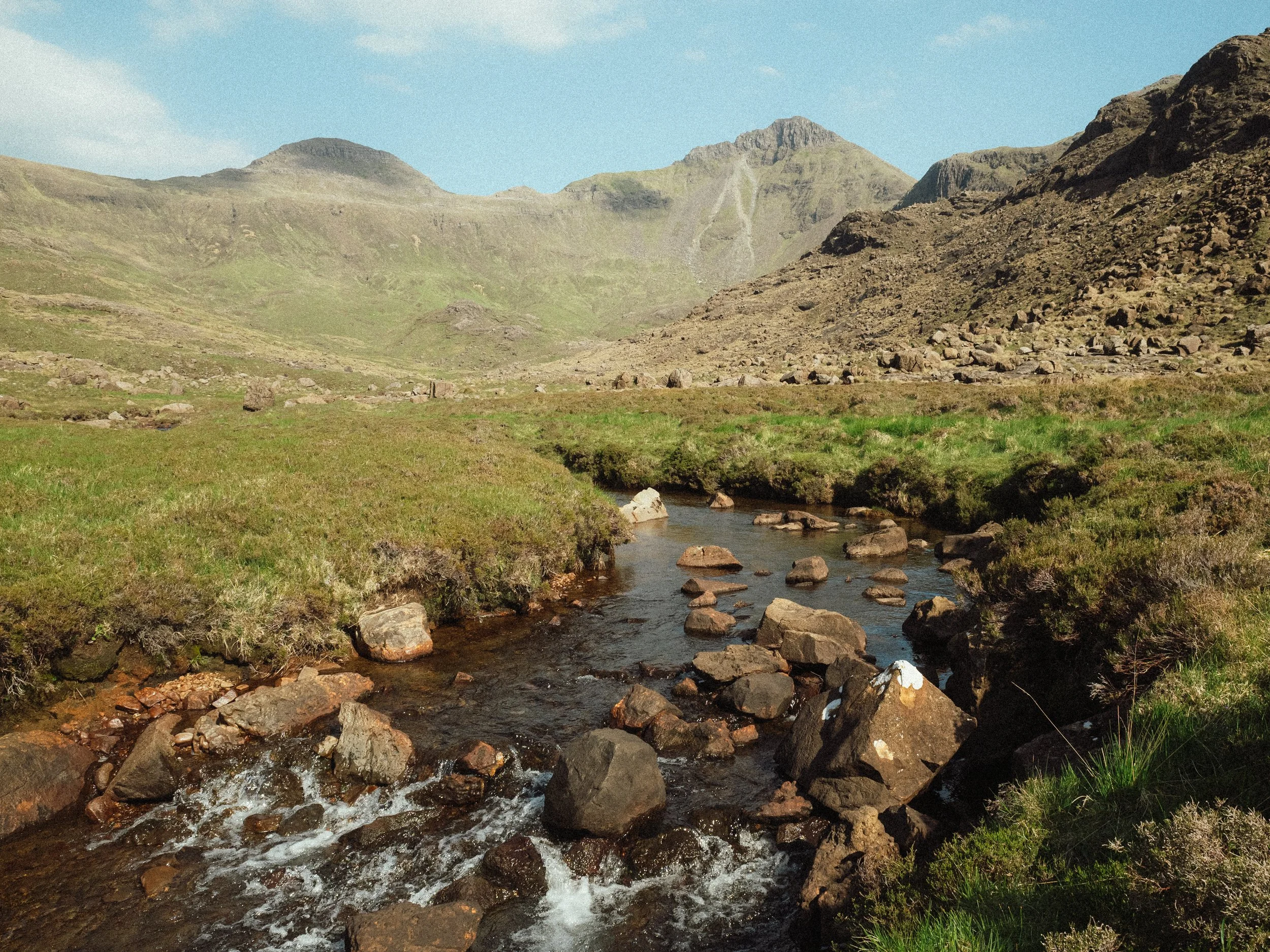
We made the decision to leave the high mountains behind and descend from the bealach. Our route took us down through a beautiful glen towards Harris, where the beautiful mausoleum stands overlooking the sea. It was a change of scenery from the rugged volcanic peaks we had become accustomed to, but one that would prove just as memorable.
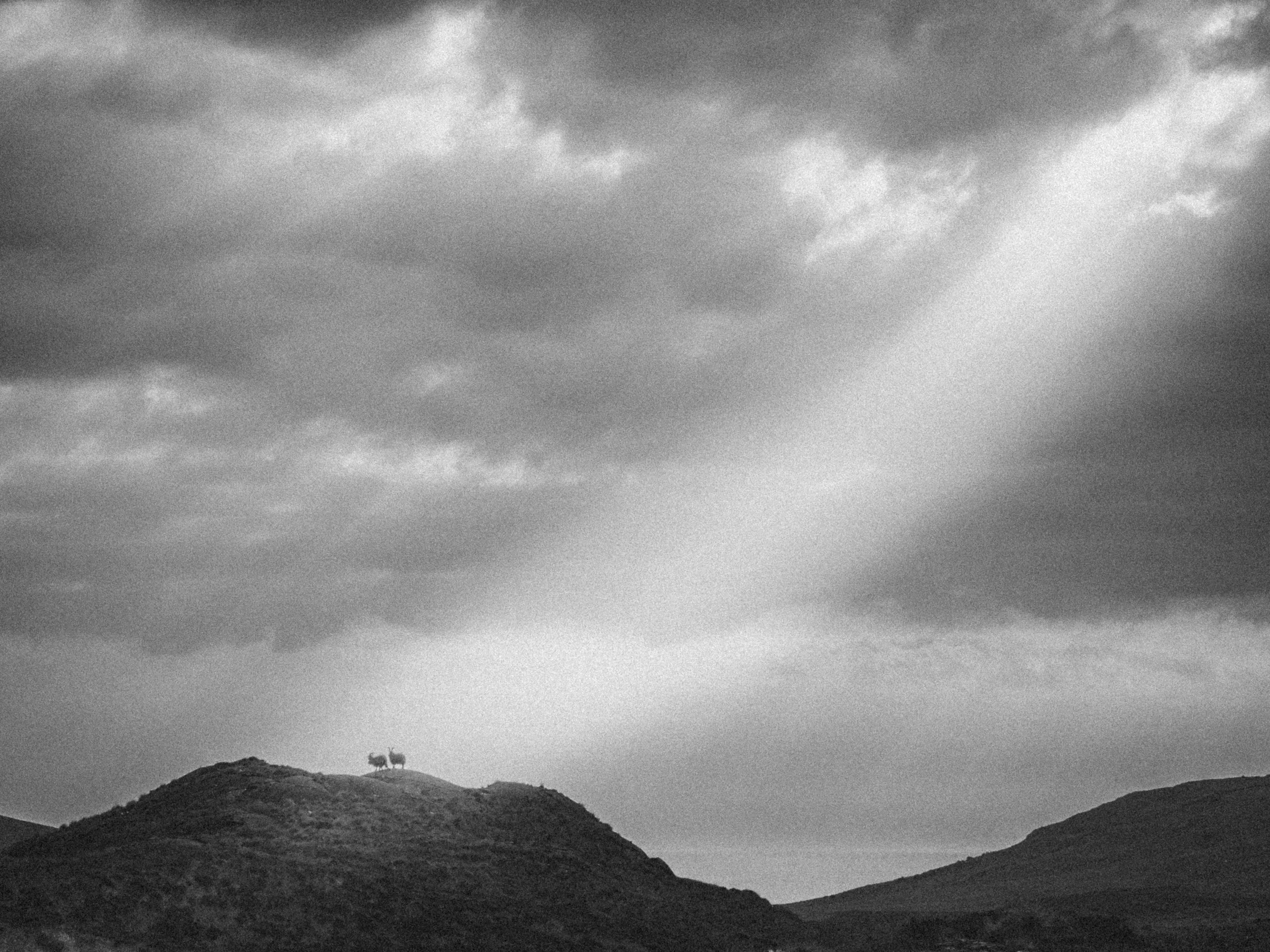
The descent through the glen was nothing short of spectacular. The landscape changed dramatically as we lost height, with steep slopes gradually giving way to softer ground and peaty vegetation. Streams cut through the valley floor, with towering mountains above us on either side. At every turn, the character of the glen seemed to change, revealing new views and textures that made the journey as enjoyable as the destination itself. Mountain goat’s roamed around the island and always stood watching us from a distance.
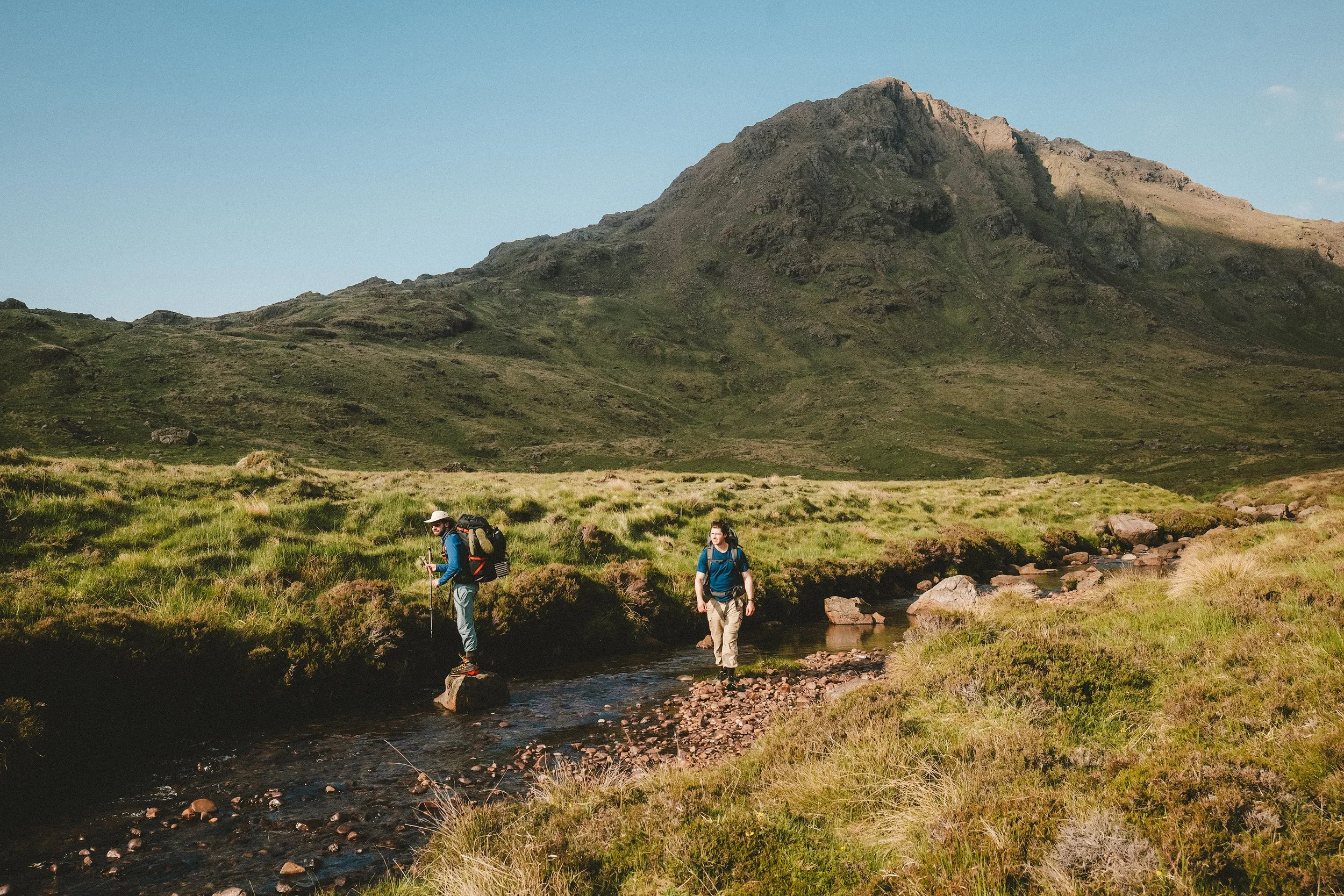
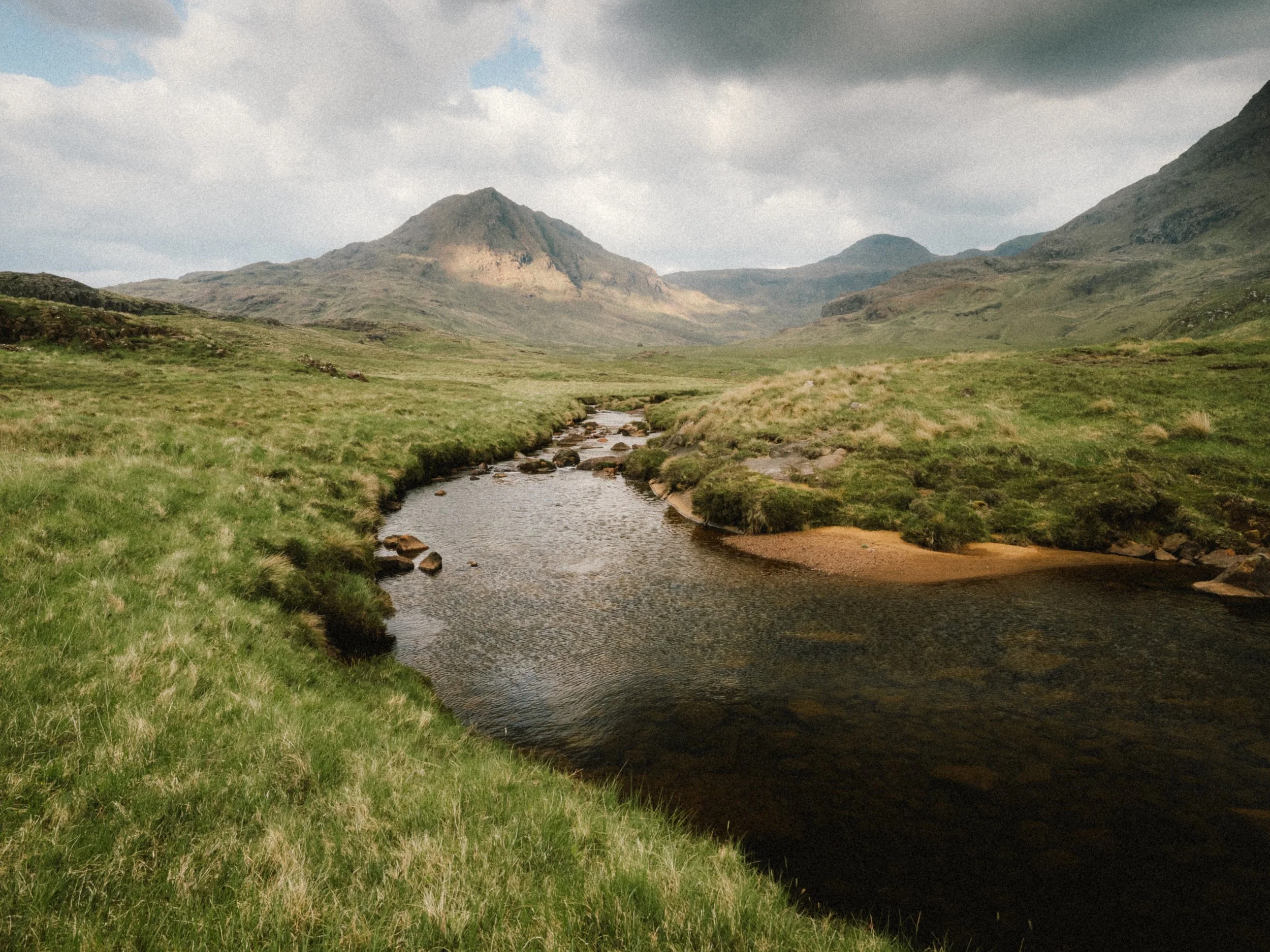
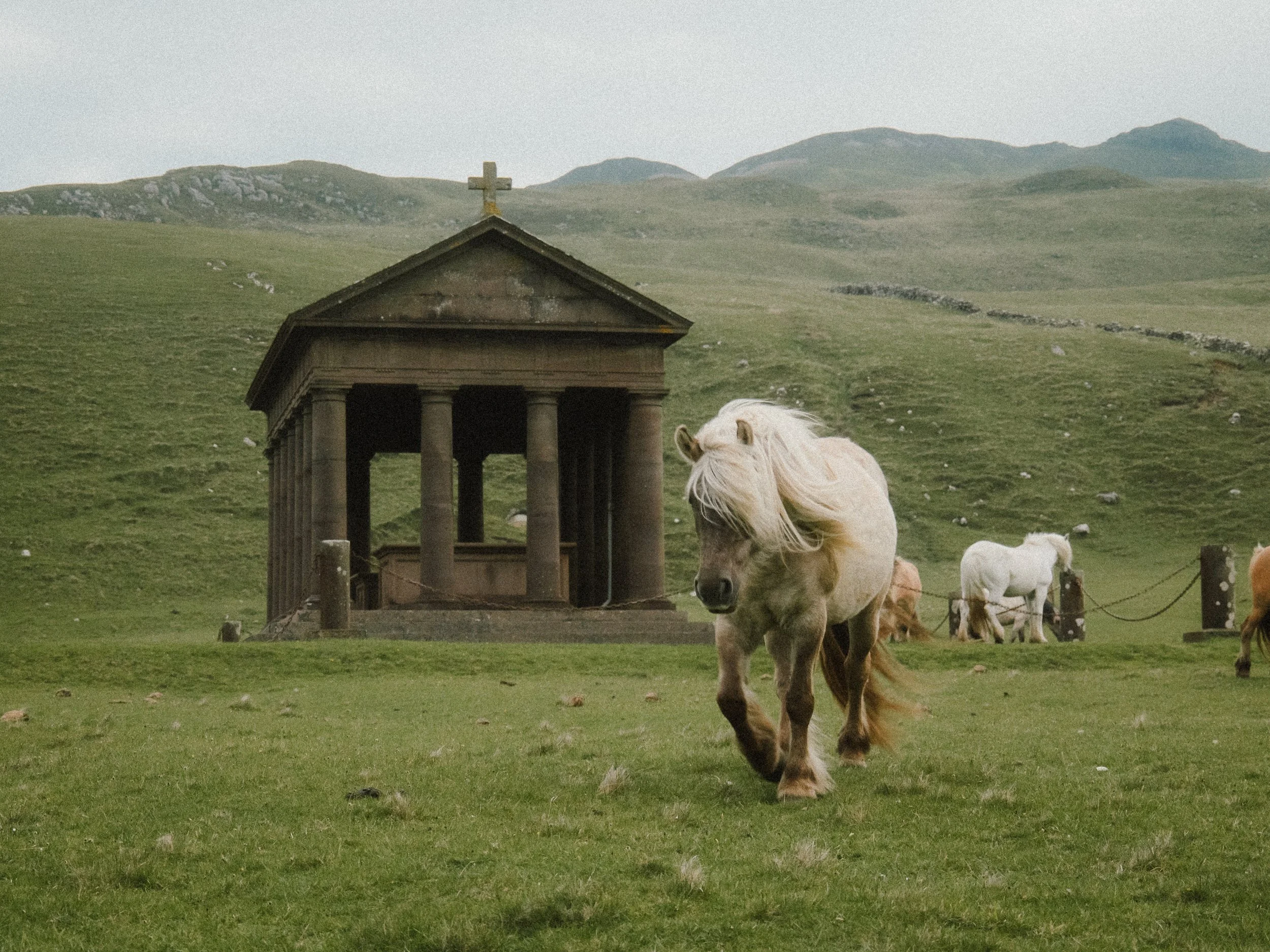
As we continued towards Harris, the mountains slowly began to recede behind us. The terrain flattened out and the landscape opened up into wide grassy plains bordered by dramatic cliffs overlooking the sea. The contrast between the wild mountain interior and the coastal scenery was so prominent. Ahead stood the impressive Bullough Mausoleum, its grand architecture seeming almost out of place in such a remote setting.
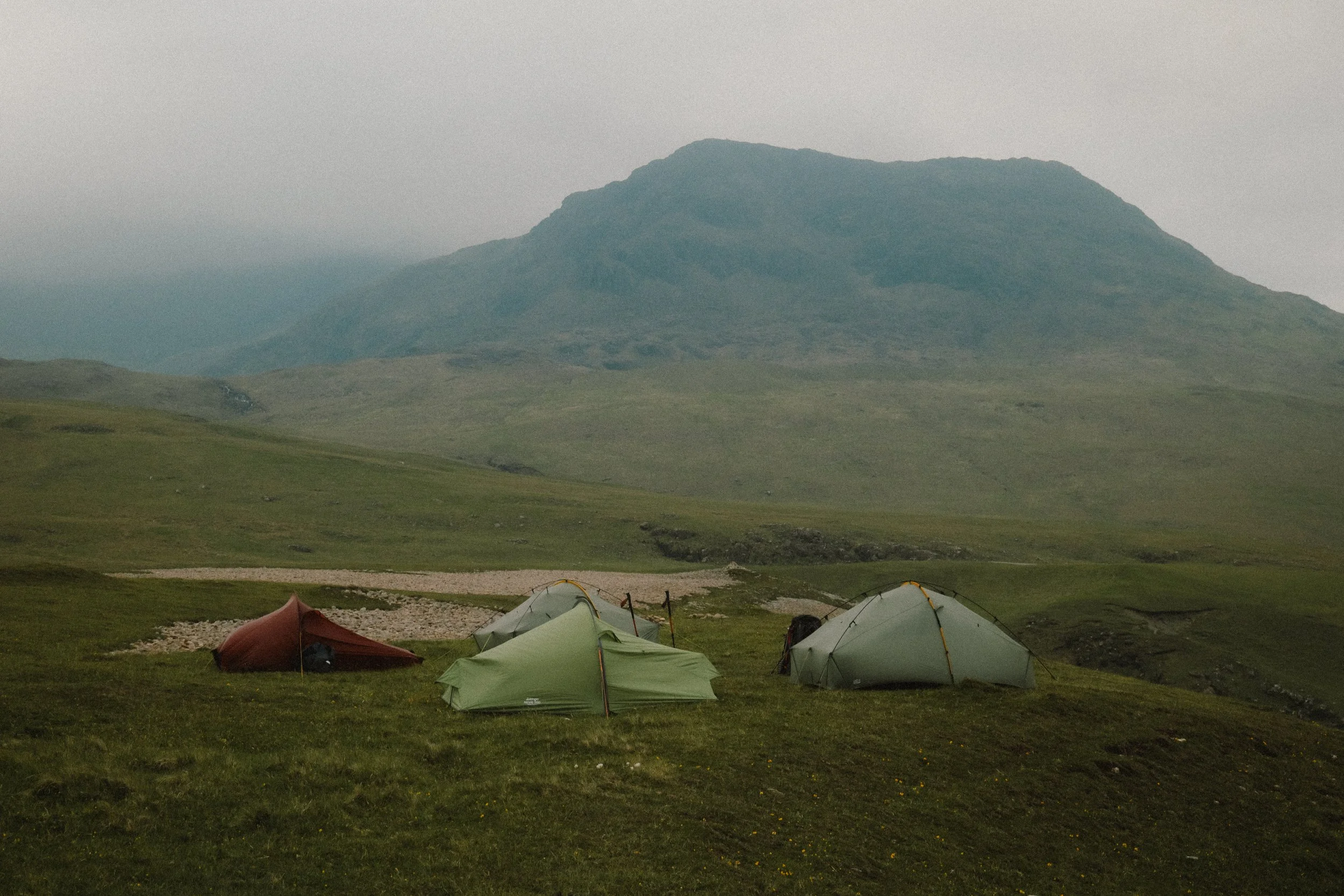
By the time we reached Harris, the weather had begun to change exactly as forecast. Hopes of another spectacular sunset gradually faded as cloud started to build across the island. One by one, the peaks of Rum disappeared beneath a blanket of mist and low cloud, transforming the familiar view into something mysterious and subdued. It was fascinating to watch the mountains become shrouded from view, their faces slowly swallowed by the changing weather.
We pitched our tents close to the sea, finding what shelter we could from the strengthening wind. As the gusts increased, we worked together to secure the tents, shielding each other from the wind and making sure everything was firmly anchored for the night ahead. It was a reminder of how important teamwork can be when camping in remote places where conditions can change quickly.
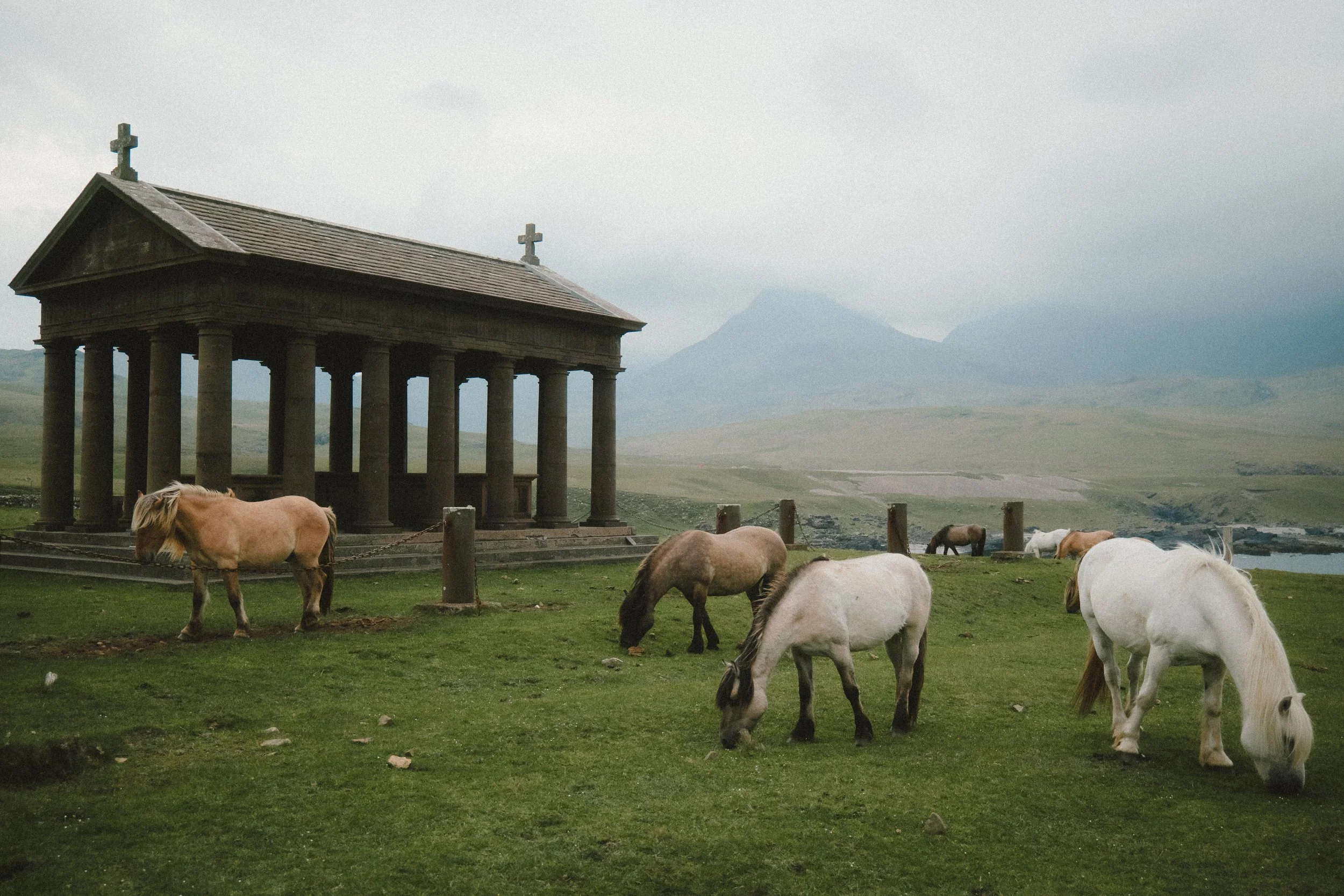
Later in the evening, the wind gradually eased and calm returned to the coast. Taking advantage of the break in the weather, we wandered over to explore the Bullough mausoleum. The building was both impressive and peculiar an elegant monument that seemed almost surreal against the backdrop of Rùm’s wild landscape. Despite looking somewhat out of place, its presence added another layer to the island’s history.
As we walked around the monument, we encountered several of Rùm’s famous ponies roaming freely nearby. They were curious and remarkably friendly, calmly grazing and wandering across the landscape. Watching them move through the coastal grasslands added to the sense that Rùm is a place where nature and history exist side by side.
As darkness fell, we returned to our tents and settled in for the night beside the sea. The wind had calmed down to almost nothing. Giving us a peaceful night.
Chapter 7: One More Day
The next morning, we woke up to the sound of torrential rain battering against the tents. Overnight, the weather had changed completely, and the calm coastal camp had transformed into a grey and windswept landscape. There was little point in rushing to pack up in such conditions, so we stayed in our sleeping bags, listening to the rain and waiting patiently for a break in the weather.
After some time, the rain finally eased enough for us to get outside our tent. We quickly packed away our tents, trying to keep as much gear dry as possible, before making ourselves something warm to eat. With fresh energy and the prospect of returning to Kinloch, we set off on the roughly 10 km hike back across the island.
Fortunately, the rain held off for much of the journey. Although the mountains remained shrouded in cloud, hiding the dramatic peaks we had spent the previous days exploring, there was still a certain beauty to the landscape. The mist gave Rùm an entirely different character—wild, mysterious, and untamed. Every now and then we would look back towards the hidden mountains, knowing what lay beneath the clouds.
As the kilometres passed, Kinloch slowly came into view in the far distance. Seeing the village again brought a wave of excitement. After days in the mountains and along the coast. Upon arriving, our first stop was the little shop, where we happily refueled with chips, snacks, and tasted incredible after several days of hiking and camping.
Nearby stood the community centre, an old and rather run-down building that has clearly seen many years of island life. Despite its age, it offered a welcome shelter from the weather and had its own unique charm. Inside was a pool table and a selection of musical instruments, including a piano that, we were told, had not been tuned for over sixty years. You can only imagine the sounds that emerged when its keys were pressed, it certainly had character, if not perfect pitch!
While the rain hammered down outside once again, we spent time inside playing pool and laughing together. Moments like these often become some of the fondest memories of any expedition; not the summits or the views, but the shared experiences and simple pleasures enjoyed in good company.
Later, as the rain finally eased, we set out one last time to find our final campsite. We chose a spot on the coast near Kinloch, close to the ferry terminal for an easy departure the following morning. After pitching our tents for the last night of the trip, we cooked some food and enjoyed the quiet atmosphere as evening settled over the island.
Nearby stood a solitary tree overlooking the sea. Framed against the coastline and changing skies, it made for one final photographic subject—a fitting symbol of the island's beauty and isolation. As the light faded, it felt like the perfect way to end our adventure on Rùm.
The following morning, we packed up camp one final time and made our way to the ferry. As the boat departed and Rùm slowly disappeared into the distance, there was a shared sense of gratitude for the experiences we had enjoyed together. From glorious sunshine and mountain sunsets to torrential rain and coastal camps, we had experienced every kind of weather the island could offer and made the most of every moment.
The ferry was a three-hour journey back to Mallaig. We reflected on the days we had spent exploring its mountains, coastlines, and ever-changing landscapes. The crossing home provided a final moment of calm after the adventure.
During the crossing, we sat together on deck sharing stories, reliving memorable moments from the trip and laughing about the challenges we had faced along the way—from battling strong winds to navigating the mountains and camping beneath the stars. As the ferry approached the mainland, the familiar outline of Mallaig came into view. To our surprise, the sound of bagpipes drifted across the harbour as we arrived, creating a truly Scottish welcome home. It felt like the perfect ending to an incredible journey—one filled with adventure, friendship, and memories that will stay with us for many years to come.
It had been an absolutely wonderful trip—filled with adventure, laughter, stunning landscapes, and memories that will last a lifetime.
Thank you,
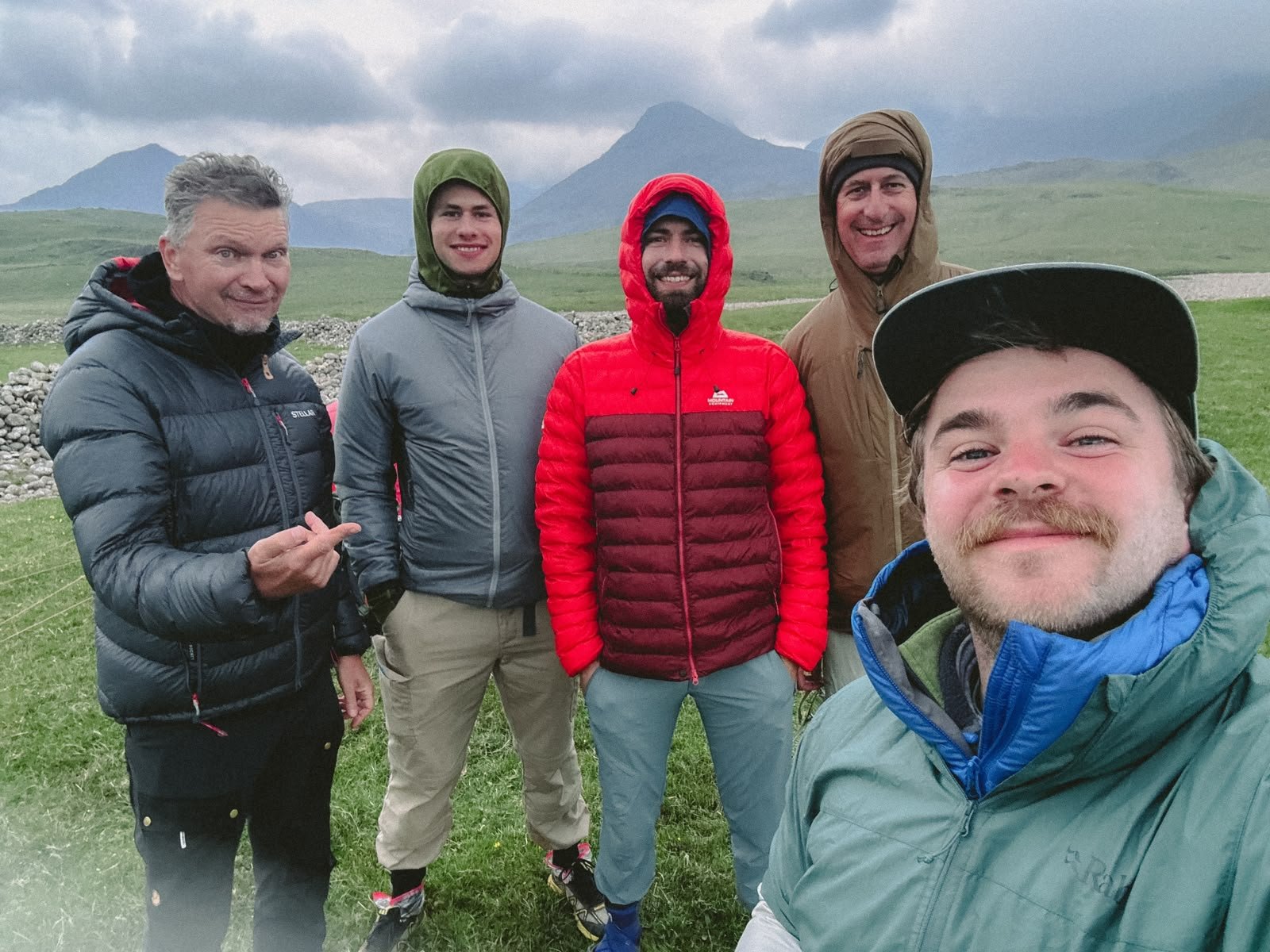
Josh, Jack, Ross and Alan.